
















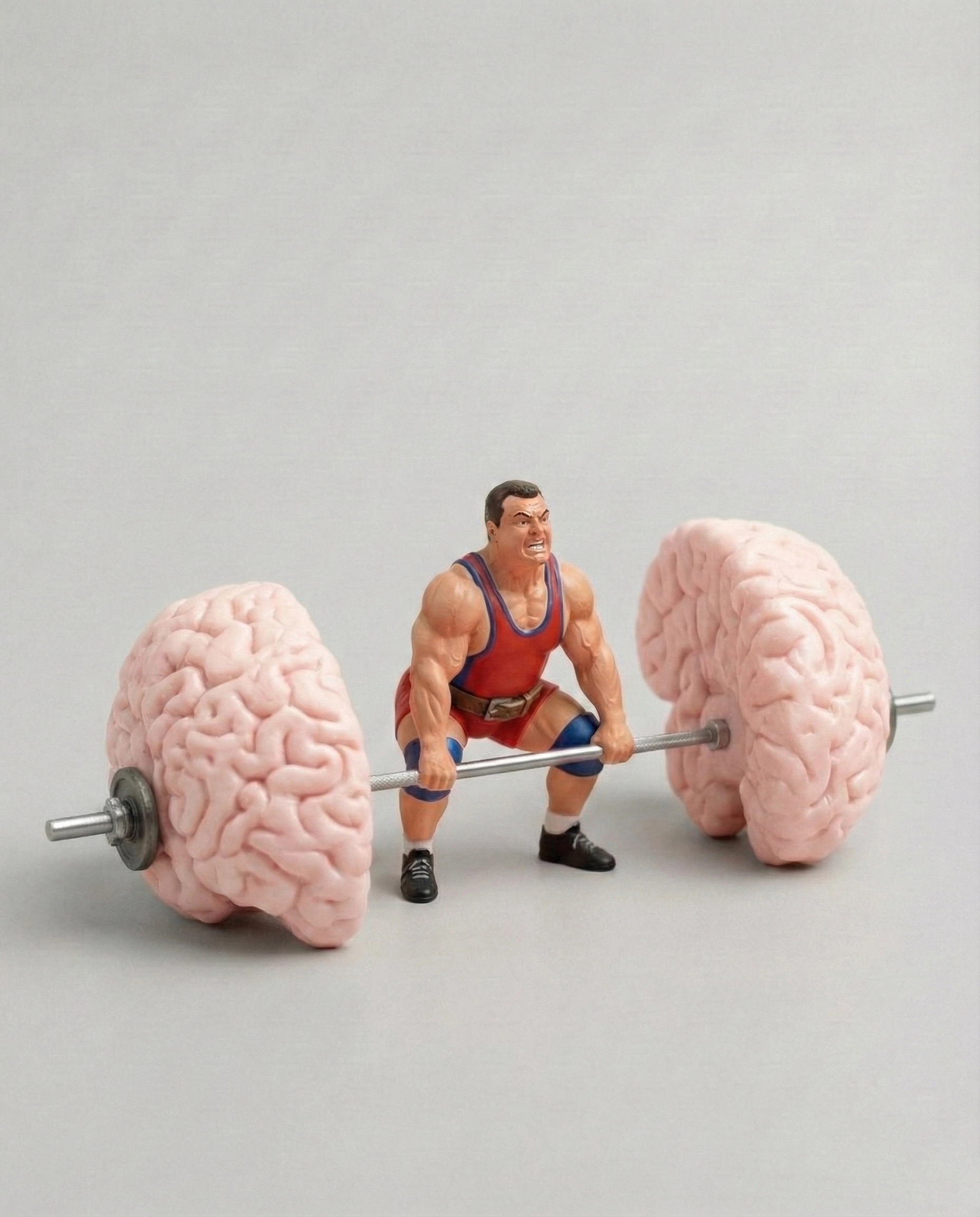

Balance as a Future Skill: When Work Becomes a Surfing Lesson.
In a workplace full of conflicting trends, balance is no longer just a soft skill. It is the skill that will determine our success in the coming years.

Imagine you’re standing on a surfboard. Not in the ocean, but right in the middle of the office. On one side, someone is pulling you: “Come on, hurry up, give me more options—AI can handle this; the market won’t wait.” On the other side, someone else is pulling you: “Be more thorough—have you checked the facts? Have you involved the team?”
And you're right in the middle of it. Just don't fall now.
This is not an uncommon sight in today's workplace. It is no longer solid ground on which one can simply walk straight ahead. Rather, it resembles a shifting surface on which one must constantly readjust one's footing.
Anyone who can navigate this environment with confidence has an advantage that’s hard to put into words, because it isn’t reflected in any certificate. And yet it will determine who comes out on top in the workplace in the coming years.
Today’s work environment demands skills that, at first glance, seem contradictory: making quick decisions while thinking things through thoroughly; delegating trust while maintaining control; being open to new ideas while still providing guidance. These are not contradictions that need to be resolved. They are tensions that one must learn to recognize and manage. Those who cannot do this swing back and forth. Those who can, take the helm.
“Control and trust are not a contradiction that you can resolve once and for all and then put behind you.”
What the Numbers Reveal
The latest“Future Skills 2026” study by Haufe Akademie, which surveyed nearly a thousand specialists and managers in German-speaking countries, highlights exactly where this tension is most acute today. Managers and their teams largely agree on which skills will matter most over the next five years: problem-solving, a willingness to learn, and communication. So far, so familiar.
Things get interesting when you ask who already possesses these skills. When it came to leadership and change management skills, 73 percent of executives rated themselves as well-prepared. Their employees rated themselves at 54 percent. That’s a difference of 19 percentage points. Not because one side is lying and the other is telling the truth, but because both are looking at the same reality from different perspectives.
This isn't a flaw in the system. It shows how difficult it is to realistically assess one's own abilities, especially when everything around you is constantly changing. And it shows just how urgently we need to learn to do exactly that.
Speed is not a virtue. Timing is.
The obvious answer to feeling overwhelmed is to slow down. Pause. Take a deep breath. That’s not wrong. But what if the world doesn’t slow down with you? 56 percent of the professionals surveyed expect AI to significantly change their work over the next two to three years. If you wait too long, you’ll simply have to endure the change instead of shaping it. Balance doesn’t just mean slowing down. It means choosing the right pace at the right time. Sometimes that means going full speed ahead. Sometimes it means consciously pausing. The difference lies in having a sense of which moment calls for which approach.
That sounds abstract, but it isn’t. Professional athletes are familiar with the principle of periodization: exercise and recovery alternate according to a plan, because constantly pushing yourself to the limit doesn’t strengthen the body—it destroys it. The same applies to thinking, decision-making, and leadership. Those who never take a break lose more than just strength; they lose their judgment. What remains is what causes many people chronic stress: the feeling that they can no longer consciously control their own situation.

The tortoise shows that if you use good timing, you can often go surprisingly far with less effort.
What You Can Actually Learn
Take a moment to pause
A brief moment is all it takes: What did I just do? Did it work? If you ask yourself these questions regularly—whether in a meeting, during a conversation, or just to yourself—you’ll develop a sense of when you’re on track and when you’re not.
Building Trust
Delegating also means learning to live with uncertainty. Don’t correct things right away; don’t take on everything yourself. Those who can handle this tension learn to strike a new balance between control and trust time and time again.

From the board to the office: balance is key.
Balance isn't a state you reach one day and then just have. Surfers know that. Even after years on the water, there are waves that catch you off guard, moments when the board slips out from under you. What changes isn't that you don't fall anymore. It's how quickly you get back up.
That’s exactly what the real skill is. It’s not about perfect balance, but about having a feel for the wobble, staying calm in the moment of decision, and trusting your ability to make adjustments. Practicing this won’t make you infallible. But it will make you someone people are happy to hand the board to when the waves get bigger.