








Twice as old, but also twice as smart?
Guest author Alexander Gutt shows what Gen Z can teach us about work and
—intergenerational relations.

It was an evening I hadn’t expected much from. Antraining event agency I’m friends with. The topic: What we can learn from Gen Z. You show up because you’ve been invited, maybe to run into a few former coworkers—not because you’re looking for some life-changing insight. Then the guest was introduced: twenty years old, a content creator. I immediately noticed a mental label popping into my head.
I saw someone who grew up in front of their cell phone, made a few videos, and now calls that a career. Lots of visibility, little substance. Not particularly fair, but that’s exactly what I thought.
With my drink in hand, I waited for my preconception to be confirmed. No such luck.

Nine years of work experience at age twenty
Our guest uploaded his first YouTube video when he was eleven. All on his own, without any guidance or plan. Just out of curiosity and a desire to experiment. Since then, he has developed countless formats, scrapped them, started over, built an audience, gained trust, and turned them into projects.
These days, he creates content not only for himself but also for others; he’s built a team around him and even advises major television networks. As I listened, at some point I stopped thinking, “He’s only twenty.” Instead, I thought, “He’s a real entrepreneur.”
Lightness is a choice
What impressed me that evening wasn’t just his ambition. It was the way he talked about work. What drove him, aside from creative work, was the fun he found in it. That’s something many of us lose over the years: a sense of ease. The ability to take what you do seriously without succumbing to the stress that comes with a demanding job.
Maybe that's exactly what bothered me so much.
Our generation learned about work in a different way: being reliable, delivering results, persevering, and taking responsibility. None of this is wrong—quite the contrary. Companies wouldn’t function without this mindset. Experience, sound judgment, and perseverance are values that shouldn’t be overlooked. But this mindset also has its downsides. At some point, a sense of duty can easily become a burden. Professionalism can turn into a routine that leaves little room for curiosity, a sense of playfulness, or the question of whether work might feel different.
That's exactly why it's worth taking a look at the younger generation. Not because they do everything differently, but because they ask different questions.
"Not every change is progress."
Different Generations, Different Strengths
Gen Z seeks meaning, growth, and connection at an earlier age. They often bring with them a digital native mindset, a different pace, and greater openness to change. This can be unsettling for older generations. Sometimes justifiably so. Not every change is necessarily progress. Nevertheless, there is something valuable in this. Because in today’s companies, it’s not just people of different ages who come together, but also different ideas about what good work looks like. Some place greater emphasis on reliability and depth. Others prioritize speed and agility. Some want to think things through thoroughly to the end, while others prefer to experiment and refine as they go.
“Balance doesn’t mean that everyone thinks the same way, but rather that different perspectives come together in a productive way.”
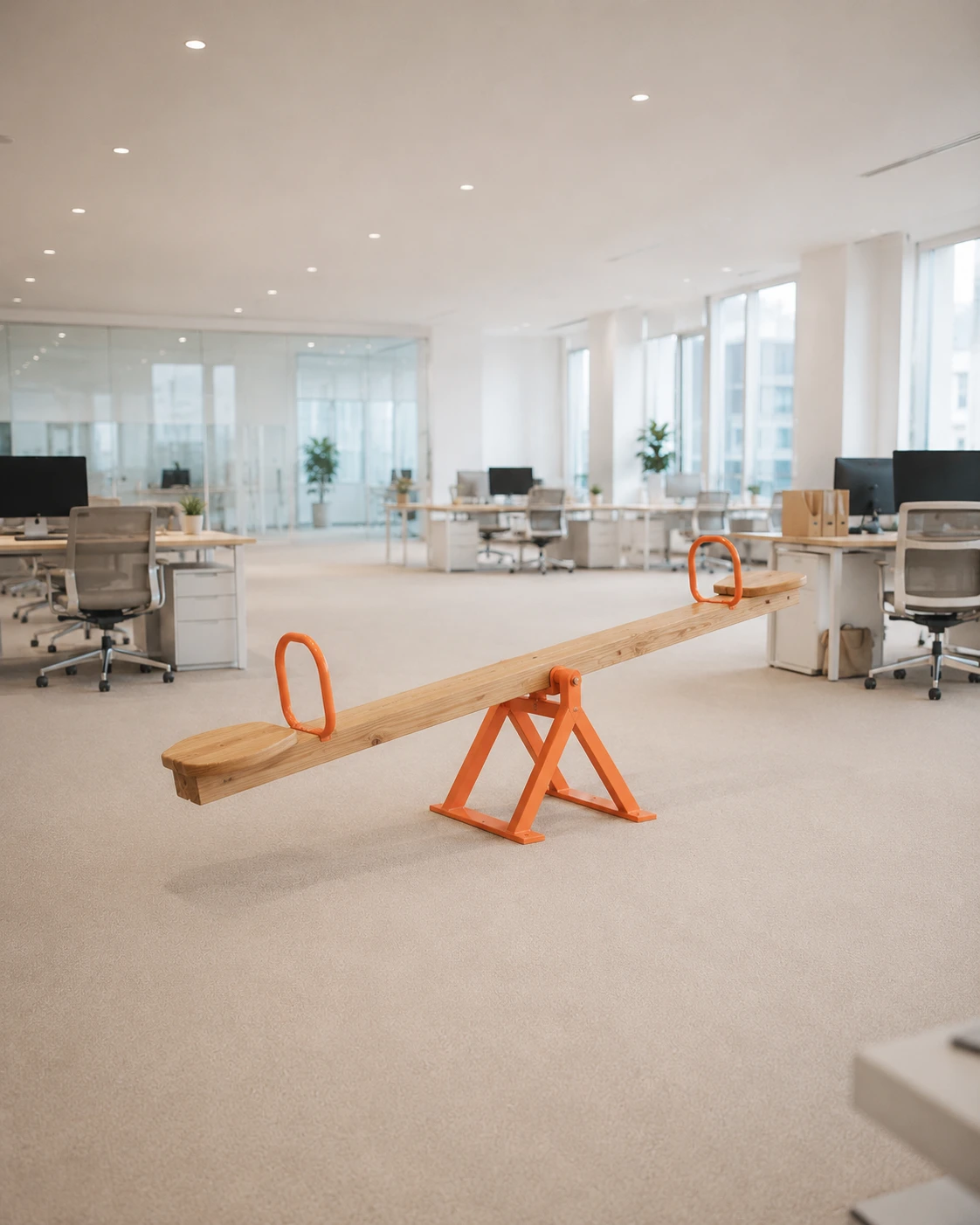
Friction isn't a problem—it's the raw material.
The problem begins when each side considers its own position to be the only reasonable one. Then experience quickly turns into dogmatism, and enthusiasm for change quickly turns into superficiality. It is possible to work together this way, but it rarely leads to improvement.
The real challenge is something else: not viewing differences as a hindrance, but as a strength. The calmness of the experienced and the agility of the younger members. Reliability and a willingness to adapt. Depth and pace. That is precisely where balance lies in the best sense of the word: not that everyone thinks alike, but that different perspectives come together productively.
That doesn't happen on its own. It takes the willingness to see others not as a problem, but as a new perspective. And sometimes it takes an evening with a 20-year-old content creator who makes you realize that you rarely ask yourself why you actually work.