4.6
PMI® Certification
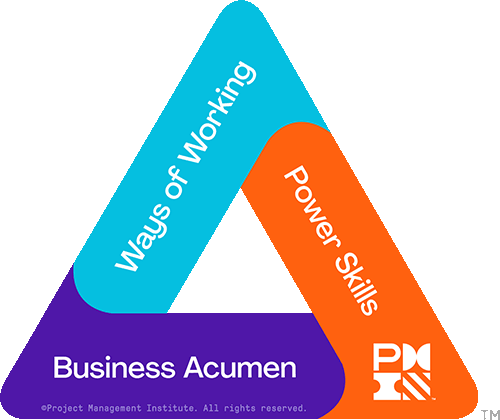
Earn PDUs with this training

Fundamentals of Systemic Project Management
Setting the Course: Clarifying the Assignment
Dealing with Project Stakeholders in a Targeted Manner
Leading the project team
Successful Meetings
Peer consultation
Change Management in Projects
Conflicts and Workflow in Projects
Important: Participants will contribute their own specific case studies from their projects and programs and use them to develop analyses and options for action.
The content listed here should be considered a “selection” and will be addressed based on the specific nature of the participants’ case studies. Please refer to the notes under “Methods.”
Your Digital Add-On: To complement the training, you’ll receive free access to additional digital learning resources afterward. These include an e-learning course on initial applications of AI in project management, as well as a guide on how to use AI as your personal learning companion or coach to help you apply what you’ve learned in your day-to-day work.
In your online learning environment, you will find useful information, downloads and extra services for this training course once you have registered.
After attending this seminar, you will receive a confirmation of 21.50 PDUs.
Practical insights, structured exercises, reflections, group and case studies, simulations, and peer consultation on specific project challenges. Participants’ own project examples deepen their understanding of systemic relationships and lead to more clearly defined project objectives, stakeholder strategies, leadership and communication approaches, decision-making frameworks, and actionable next steps.
Important: You’ll bring your own real-life cases to be discussed in the “ training .” Preparation involves filling out a questionnaire (available in your Haufe Akademie learning environment after you register) and a preliminary discussion (the trainer will contact you to schedule this). All information you provide will remain confidential!
The " training " is aimed at project and program managers, subproject managers, project staff, project and program leaders, employees and heads of project management offices, as well as change managers, organizational developers, and internal or external consultants.
It is particularly well-suited for individuals who want to effectively manage complex, cross-functional projects involving multiple stakeholders or under increased pressure to change.
In partnership with the Inner Development Goals Initiative




Wednesday, 25.11.2026
09:00 am - 6:00 pm
Thursday, 26.11.2026
09:00 am - 6:00 pm
Friday, 27.11.2026
09:00 am - 4:00 pm
Wednesday, 09.12.2026
09:00 am - 6:00 pm
Thursday, 10.12.2026
09:00 am - 6:00 pm
Friday, 11.12.2026
09:00 am - 4:00 pm

Wednesday, 03.02.2027
09:00 am - 6:00 pm
Thursday, 04.02.2027
09:00 am - 6:00 pm
Friday, 05.02.2027
09:00 am - 4:00 pm
Monday, 08.03.2027
09:00 am - 6:00 pm
Tuesday, 09.03.2027
09:00 am - 6:00 pm
Wednesday, 10.03.2027
09:00 am - 4:00 pm
Wednesday, May 26, 2027
09:00 am - 6:00 pm
Thursday, May 27, 2027
09:00 am - 6:00 pm
Friday, May 28, 2027
09:00 am - 4:00 pm
Wednesday, June 16, 2027
09:00 am - 6:00 pm
Thursday, June 17, 2027
09:00 am - 6:00 pm
Friday, June 18, 2027
09:00 am - 4:00 pm
Monday, July 19, 2027
09:00 am - 6:00 pm
Tuesday, July 20, 2027
09:00 am - 6:00 pm
Wednesday, July 21, 2027
09:00 am - 4:00 pm
Wednesday, September 8, 2027
09:00 am - 6:00 pm
Thursday, September 9, 2027
09:00 am - 6:00 pm
Friday, September 10, 2027
09:00 am - 4:00 pm
Monday, October 25, 2027
09:00 am - 6:00 pm
Tuesday, October 26, 2027
09:00 am - 6:00 pm
Wednesday, October 27, 2027
09:00 am - 4:00 pm
Wednesday, December 8, 2027
09:00 am - 6:00 pm
Thursday, December 9, 2027
09:00 am - 6:00 pm
Friday, December 10, 2027
09:00 am - 4:00 pm
Monday, January 17, 2028
09:00 am - 6:00 pm
Tuesday, January 18, 2028
09:00 am - 6:00 pm
Wednesday, January 19, 2028
09:00 am - 4:00 pm
Training is guaranteed to take placeThe next booking ensures this course will take placeYour optimizer, innovator and companion since 1978 -
Your professional partner for professional development and seminars, training courses and topical conferences.
Whether on site, live online or in-house - our customised solutions, our claim to the highest level of consulting expertise and training tailored to your needs simplify the acquisition of skills for the working world of the future and sustainably facilitate professional development.
A wide range of seminars, individual coaching and our flexible formats support HR managers and decision-makers in shaping the future and developing employees, in-house teams and companies.
Experience the benefits of online training from the comfort of your own home. Our online formats meet the highest quality standards and are in no way inferior to face-to-face events in terms of practical relevance. Learn together live online in interactive groups or digitally at a time of your choice.
We are there for you Monday to Friday 8:00 a.m. - 5:00 p.m.
In our Questions & Answers (FAQ) section, you will find all the answers and the most frequently asked questions about your selected topic.
 PDUs: 21.50