Current public procurement law
Legally compliant implementation for clients
 4.4
4.4
Contents
Preparation for awarding the contract: setting the course for successful commissioning
- Who has to tender and how?
- What are the exceptions to the tendering obligation?
- Preparing the announcement: avoiding typical mistakes.
- Bidder eligibility: Formulating proof of suitability properly and with legal certainty.
- News on the design of the service description.
- Award criteria: Suggestions for the development of target-oriented scoring systems.
Implementation of the award procedure
- Dealing with incorrect offers: When am I allowed/must I clarify or demand additional information?
- Selection and evaluation of offers.
Current special topics on public procurement law, e.g.
- What changes can be made to an ongoing contractual relationship without retendering?
- What special features apply when tendering for architectural services?
Legal protection: an overview with strategic tips
- Obligations to give notice of defects.
- Dealing with bidder complaints by the client.
- Procurement review and complaint procedures.
Learning environment
In your online learning environment, you will find useful information, downloads and extra services for this training course once you have registered.
Your benefit
In our training on public procurement law, the:die trainer provides you with the latest practical information.
- You will refresh your specialist knowledge and receive valuable tips and advice on how to deal with the current public procurement regulations.
- By using current examples, you will learn how to master public procurement law in a legally compliant manner in the future.
- The training on public procurement law provides up-to-date information on the current status of legislation and case law.
Methods
Lecture and discussion. Practical examples will illustrate the topics covered. There will be enough space for questions and exchange of experiences among the attendees .
Recommended for
employees of the administration and public companies involved in procurement, in particular from the purchasing and procurement, construction, finance and treasury departments. employees of companies that have to apply public procurement law as recipients of funding. Lawyers and management consultants who deal with public procurement law. This training is also suitable for newcomers .


Questions about the seminar content
Public procurement law directly determines how public contracts are prepared, executed, and documented. In this training , you training a structured overview of the current legal principles of public procurement and their practical significance. Using practical examples, you will learn how to implement the requirements in your procedures in a legally compliant manner. This will give you more confidence in your day-to-day business and reduce typical procedural errors.
Changes in legislation and new case law often significantly alter the requirements for procurement procedures. The training you training a concise overview of the relevant developments and their specific impact on your practice. This enables you to review and adapt existing processes in a targeted manner. This strengthens the legal certainty of your procedures and minimizes liability risks.
Exceptions to the tendering requirement are legally permissible, but must be carefully reviewed and documented. The training helpful guidance on the most important exceptions and their prerequisites. This enables you to make an informed decision as to whether an exception applies and to record your reasoning in a comprehensible manner. This reduces the risk of formal errors and strengthens the stability of your procedures.
Unclear or incomplete service descriptions often lead to misunderstandings, imprecise offers, or reviews. In training , you training what requirements a legally compliant service description must meet and how to structure it systematically. Practical tips will help you identify typical weaknesses early on. This will improve the comparability of offers and increase procedural reliability.
A review procedure places high demands on documentation and justification. In training , you training a structured overview of the process, deadlines, and key procedural steps. This will enable you to prepare and document your decisions from the outset in such a way that they are comprehensible and reliable in the event of a dispute. This will strengthen your confidence in your actions, even in conflict-prone situations.
Procurement procedures in accordance with public procurement law made easy
Very special collective bargaining regulations apply to the public sector, which you as an employee of the administration and public companies can discuss and learn about with other participants in our TVÖD training course. The purchasing and procurement of goods and services in particular is not quite as simple for public institutions and companies as it is in the private sector. Numerous rules and regulations must be taken into account. These include, for example:
- federal laws such as the German Construction Contract Procedures (VOB) or the German Contract Procedures for Services (VOL),
- state laws,
- European regulations.
Important basics of public procurement law
Transparent public procurement law should ensure that the principles of competition are observed when awarding public contracts. Employees of public procurement offices at federal, state and local level are particularly responsible for this. If you work in this area, you can only benefit from our training course on dealing with public tenders. In addition to a sound introduction to public procurement law during the seminar, you will receive valuable input on how to handle different contract values. In connection with public tenders, EU thresholds apply, which determine whether a contract must be put out to tender nationally or throughout Europe. Find out more about the provisions of the Sub-Threshold Procurement Regulations (UVgO) and how to apply them in practice with legal certainty in our training on public procurement law.
9348
- Customized training courses
- Direct application in practice
- Efficient use of time and resources
Ratings and feedback from our participants

Start dates and details



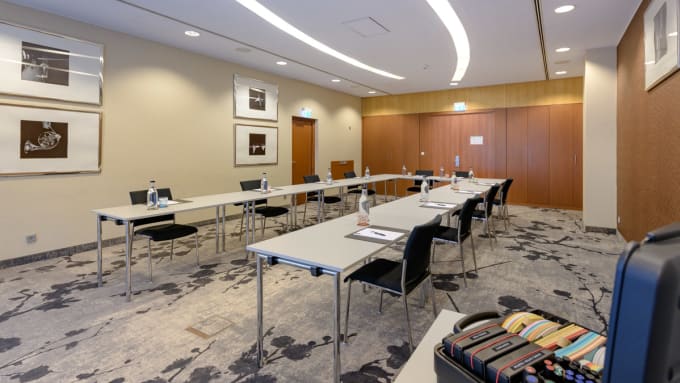





Tuesday, 28.07.2026
09:00 am - 5:00 pm
- one joint lunch per full seminar day,
- Catering during breaks and
- extensive working documents.

Friday, 18.09.2026
09:00 am - 5:00 pm
Monday, 12.10.2026
09:00 am - 5:00 pm


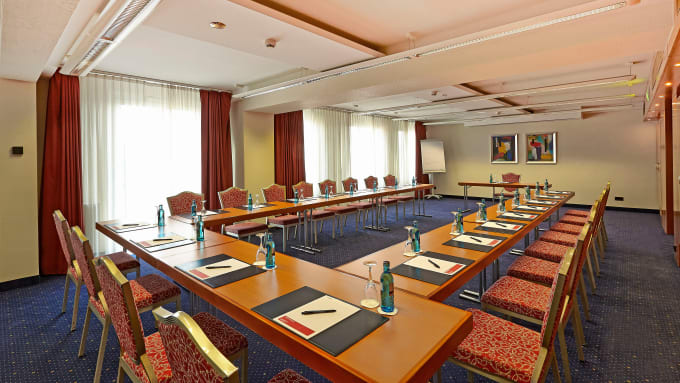




Monday, 02.11.2026
09:00 am - 5:00 pm
- one joint lunch per full seminar day,
- Catering during breaks and
- extensive working documents.
Thursday, 19.11.2026
09:00 am - 5:00 pm







Monday, 22.02.2027
09:00 am - 5:00 pm
- one joint lunch per full seminar day,
- Catering during breaks and
- extensive working documents.
Training is guaranteed to take place- one joint lunch per full seminar day,
- Catering during breaks and
- extensive working documents.
About us - The Haufe Akademie
Your optimizer, innovator and companion since 1978 -
Your professional partner for professional development and seminars, training courses and topical conferences.
Whether on site, live online or in-house - our customised solutions, our claim to the highest level of consulting expertise and training tailored to your needs simplify the acquisition of skills for the working world of the future and sustainably facilitate professional development.
A wide range of seminars, individual coaching and our flexible formats support HR managers and decision-makers in shaping the future and developing employees, in-house teams and companies.
Experience the benefits of online training from the comfort of your own home. Our online formats meet the highest quality standards and are in no way inferior to face-to-face events in terms of practical relevance. Learn together live online in interactive groups or digitally at a time of your choice.
Do you have any questions?
We are there for you Monday to Friday 8:00 a.m. - 5:00 p.m.

Questions & Answers
In our Questions & Answers (FAQ) section, you will find all the answers and the most frequently asked questions about your selected topic.

Munzinger Str. 9
79111 Freiburg

- Planning security
- Free seminar places
- Quality standards
- Planning and locations
- Funding opportunities
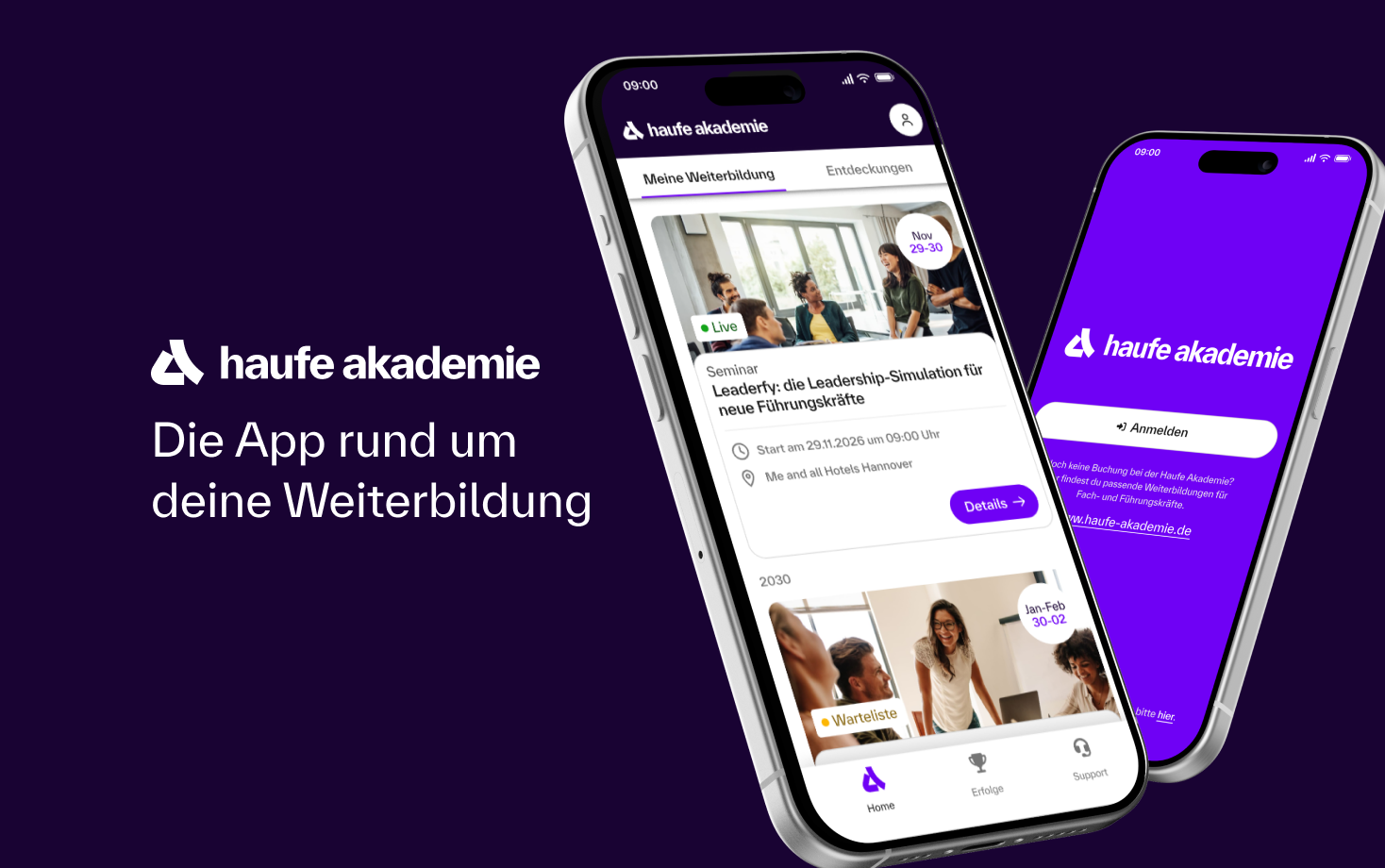
- Training app
- Business Solutions


