4.5
4.5
PMI® Certification
Earn PDUs with this training

Basics: How Do GenAI and LLM Tools Like ChatGPT, Copilot, Claude, and Others Work?
Practical Applications of LLM Tools in Project Management
An Overview of Other AI Tools and Next Steps
Challenges and Limitations in the Use of GenAI and LLM Tools Such as ChatGPT, Copilot, Claude, and Others in Project Management
Outlook on Future Developments in the Field of AI
Your Digital Add-On: In addition to the training, you’ll receive free access to additional digital learning resources. These include an e-learning course on the basics of project management, as well as a guide—provided after the training—on how to use AI as your personal learning companion or coach to successfully apply what you’ve learned to your day-to-day work.
In your online learning environment, you will find useful information, downloads and extra services for this training course once you have registered.
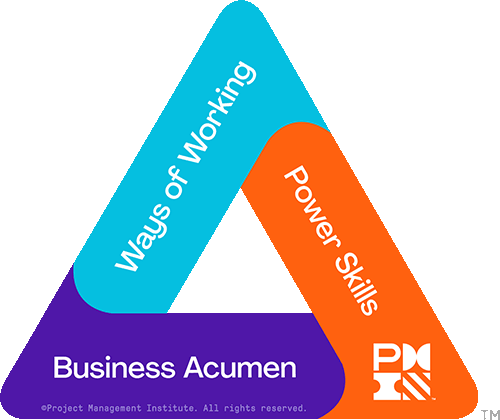
After attending this seminar, you will receive a confirmation of 7.00 PDUs.
The online training is designed to be interactive. It consists of instructor-led sessions, live demos, exercises, and best-practice examples. You’ll learn how to use LLM tools such as ChatGPT, Copilot, Claude, and others, and apply what you’ve learned directly in hands-on exercises. Most exercises take place directly in LLM tools such as ChatGPT, Copilot, Claude, and others within your browser. No additional software is required—you’ll just need an account with ChatGPT, for example, for the hands-on portion.
This training is designed for anyone who wants to use AI in project management. It is intended for both aspiring and experienced project managers (regardless of the project management methodology they use), subject matter experts, executives, and PMOs. In short: all employees across all industries who are involved in projects.
Please note:
In principle, you can also take part in the training event without your own Open.ai account or Chat GPT account. If you decide to create your own ChatGPT account (preferably before the start of the seminar) in order to work practically with ChatGPT during the training event , this is your own responsibility and you must accept the terms of use of the service(https://openai.com/policies/terms-of-use). If you use business e-mail addresses, please discuss this in advance with your data protection officer. We recommend that you do not enter any personal data in ChatGPT.


Tuesday, 24.11.2026
09:00 am - 5:00 pm

Wednesday, 03.02.2027
09:00 am - 5:00 pm
Wednesday, 24.03.2027
09:00 am - 5:00 pm
Monday, April 12, 2027
09:00 am - 5:00 pm
Friday, May 14, 2027
09:00 am - 5:00 pm
Wednesday, June 23, 2027
09:00 am - 5:00 pm
Friday, July 23, 2027
09:00 am - 5:00 pm
Thursday, August 19, 2027
09:00 am - 5:00 pm
Thursday, September 16, 2027
09:00 am - 5:00 pm
Training is guaranteed to take placeThe next booking ensures this course will take placeArtificial intelligence is particularly useful in project management when large amounts of information need to be processed, structured, or communicated. This includes, for example, creating status reports, preparing presentations, analyzing risks, or drafting stakeholder messages. In training , you training how exactly these use cases can be implemented with AI tools such as ChatGPT and how you can apply them directly to your own projects, regardless of whether you work in a classic, agile, or hybrid manner.
In everyday project work, a lot of time is lost on recurring tasks such as documentation, coordination, and summaries. AI can speed up these tasks by preparing and structuring content or providing suggestions. This training you in a practical way how to use AI in a targeted manner to reduce administrative effort and gain more time for control, decision-making, and leadership in your project.
The quality of AI results depends heavily on how precisely and structurally you formulate your queries. Prompt engineering is therefore a key skill for anyone who wants to use AI in project management. In training , you training how to structure prompts in such a way that you obtain usable results for typical project situations, for example, when requirements are unclear, when assessing risks, or when communicating with stakeholders.
AI can help to systematically identify, structure, and prioritize risks by revealing correlations and highlighting potential impacts. In training , you training how to use AI effectively as a decision-making aid without relinquishing responsibility. You will learn to critically evaluate AI results and incorporate them into your project decisions as an additional perspective.
The use of AI also raises questions about data protection, confidentiality, and the quality of results. The training specifically training these aspects and shows you where the limits of AI lie and how to use it responsibly in a project context. You will learn which tasks are suitable for AI, which are not, and how to sensibly integrate AI outputs into your existing project processes.
Your optimizer, innovator and companion since 1978 -
Your professional partner for professional development and seminars, training courses and topical conferences.
Whether on site, live online or in-house - our customised solutions, our claim to the highest level of consulting expertise and training tailored to your needs simplify the acquisition of skills for the working world of the future and sustainably facilitate professional development.
A wide range of seminars, individual coaching and our flexible formats support HR managers and decision-makers in shaping the future and developing employees, in-house teams and companies.
Experience the benefits of online training from the comfort of your own home. Our online formats meet the highest quality standards and are in no way inferior to face-to-face events in terms of practical relevance. Learn together live online in interactive groups or digitally at a time of your choice.
We are there for you Monday to Friday 8:00 a.m. - 5:00 p.m.
In our Questions & Answers (FAQ) section, you will find all the answers and the most frequently asked questions about your selected topic.
 PDUs: 7.00