Conducting a Data Protection Impact Assessment (DPIA) in a Practical Manner
From Risk Analysis to a Regulatory-Compliant DPIA—Step by Step

Classification of the DSFA within the GDPR Accountability Obligation
- Risk-based approach.
- Accountability and Its Importance in Data Protection Management.
Legal Basis Pursuant to Article 35 of the GDPR
- Prerequisites.
- Minimum requirements and reference to the consultation with government agencies.
Criteria for Determining Whether a Data Protection Impact Assessment (DPIA) Is Required
- Assessment of typical triggers such as profiling, surveillance, sensitive data, and whitelists.
Distinction from VVT, Risk Analyses, and IT Security Assessments
- Differences.
- Interfaces.
- Common Misconceptions in Practice.
Systematic Implementation of a Data Security and Privacy Impact Assessment (DSFA)
- Description of the processing.
- Assessment of necessity, proportionality, and risks.
Technical and organizational measures
- Identification, evaluation, and implementation of appropriate protective measures.
Documentation, Residual Risk, and Decision
- Documentation of the results.
- Managing Residual Risks and Decision-Making.
Common Practical Mistakes and Regulatory Authorities' Expectations
- Common errors, lack of justification, and the authorities' focus during audits.
Real-world examples and collective analysis
- Classification of typical cases such as video surveillance, HR systems, AI/tracking systems, and sensitive data.
In your online learning environment, you will find useful information, downloads and extra services for this training course once you have registered.
In this training session, you training :
- When a data protection impact assessment is required and when it is not.
- how to systematically identify risks to the rights and freedoms of data subjects.
- how you realistically assess the likelihood and severity of potential damage.
- how to identify and document appropriate technical and organizational measures.
- how to integrate DSFAs with VVT, TOMs, and existing data protection processes.
A lecture featuring a structured slide presentation, along with hands-on group work based on realistic case studies. The webinar concludes with a moderated Q&A session that looks ahead to future developments.
This webinar is intended for data protection officers, data protection coordinators, and specialists and managers in compliance, IT, and organizational departments who conduct, evaluate, or oversee data protection impact assessments and already have a solid foundation in data protection.
42919
- Customized training courses
- Direct application in practice
- Efficient use of time and resources
About us - The Haufe Akademie
Your optimizer, innovator and companion since 1978 -
Your professional partner for professional development and seminars, training courses and topical conferences.
Whether on site, live online or in-house - our customised solutions, our claim to the highest level of consulting expertise and training tailored to your needs simplify the acquisition of skills for the working world of the future and sustainably facilitate professional development.
A wide range of seminars, individual coaching and our flexible formats support HR managers and decision-makers in shaping the future and developing employees, in-house teams and companies.
Experience the benefits of online training from the comfort of your own home. Our online formats meet the highest quality standards and are in no way inferior to face-to-face events in terms of practical relevance. Learn together live online in interactive groups or digitally at a time of your choice.
Do you have any questions?
We are there for you Monday to Friday 8:00 a.m. - 5:00 p.m.

Questions & Answers
In our Questions & Answers (FAQ) section, you will find all the answers and the most frequently asked questions about your selected topic.

Munzinger Str. 9
79111 Freiburg

- Planning security
- Free seminar places
- Quality standards
- Planning and locations
- Funding opportunities
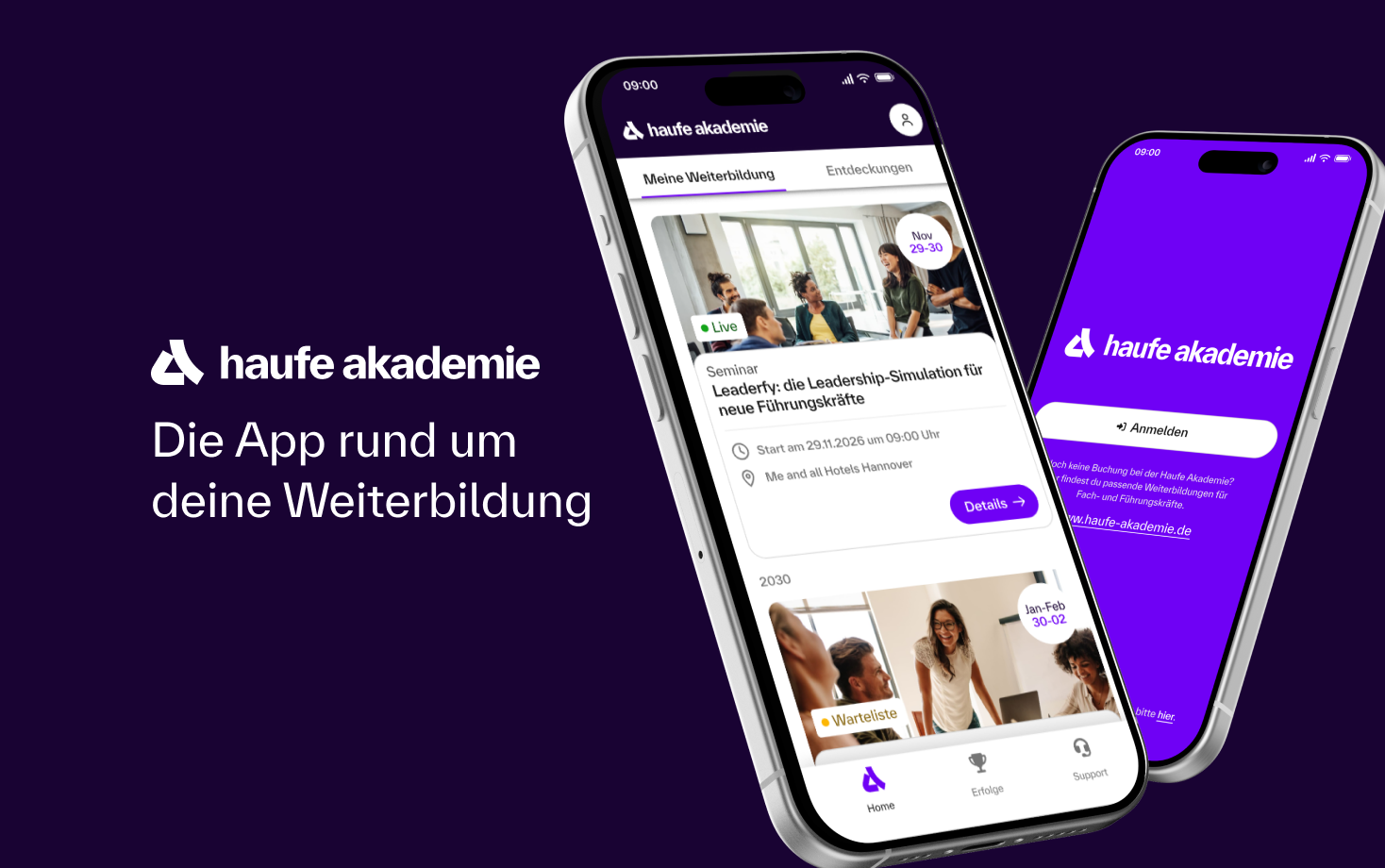
- Training app
- Business Solutions


