Creating and Using a Practical Record of Processing Activities (VVT)
From a Required Document to a Key Management Tool in Data Protection

Classification of the VVT Under the GDPR’s Accountability Requirement
- Basic principle of accountability under Article 5 of the GDPR.
- The Importance of Documentation Requirements in Data Protection.
- The Role of the VVT in the Data Protection Management System.
- VVT as a tool for providing evidence to regulatory authorities.
Minimum Legal Requirements and Useful Additions
- Mandatory and optional information in processing inventories under Article 30 of the GDPR.
- Description of the purpose and legal basis of the processing.
- Categories of data subjects and types of data.
- Recipients, data processors, and transfers to third countries.
Approaches to Structuring Processing Activities
- Department-based organization of processing activities.
- Process-oriented structuring based on business processes.
- System- or application-based structuring.
- Summary of similar processing operations.
- Criteria for a practical and clear structure.
- Recommendations for practical implementation.
Common Mistakes in Practice and How to Avoid Them
- Descriptions of processing activities that are too general or unclear.
- Too much detail or a confusing structure.
- Failure to update the VVT when process changes occur.
- Insufficient involvement of functional departments.
- Failure to use the VVT as a working tool in data protection.
Using the VVT as an Interface to DSFA, TOMs, and Exams
- The record of processing activities as a central component of the DSMS.
- The VVT as a starting point for data protection impact assessments.
- The relationship between processing activities and technical and organizational measures.
- Use of the VVT in internal data protection audits.
- The Significance of the VVT for Audits and Inspections by Regulatory Authorities.
Real-world examples and collective analysis
- Tools for creating processing inventories.
- Processing of Employee Data in the " HR Management."
- Customer Data Processing in Sales and CRM Systems.
- Use of Video Surveillance in the Workplace.
- Use of cloud services and external IT systems.
- Joint analysis and classification of processing activities in the " training."
In your online learning environment, you will find useful information, downloads and extra services for this training course once you have registered.
In this training session, you training :
- which topics are mandatory in the VVT and where students often struggle on exams.
- how to map processing activities in a structured way without simply maintaining lists.
- how the VVT can be used as a starting point for TOMs, data protection impact assessments, data erasure plans, and supporting documentation.
- how to efficiently involve departments without unnecessarily complicating the process.
- how to realistically organize maintenance, updates, and responsibilities.
The " training " combines a structured lecture with a clearly organized slide presentation and hands-on group work based on concrete real-world examples and best practices. In this way, participants develop practical guidelines for creating, maintaining, and using a record of processing activities. The session concludes with a moderated Q&A session that looks ahead to future developments.
The " training " is intended for data protection officers, data protection coordinators, and specialists and managers in compliance, IT, and organizational departments who wish to create, update, or further develop a record of processing activities in a practical manner. A basic understanding of data protection is beneficial.
42920
- Customized training courses
- Direct application in practice
- Efficient use of time and resources
About us - The Haufe Akademie
Your optimizer, innovator and companion since 1978 -
Your professional partner for professional development and seminars, training courses and topical conferences.
Whether on site, live online or in-house - our customised solutions, our claim to the highest level of consulting expertise and training tailored to your needs simplify the acquisition of skills for the working world of the future and sustainably facilitate professional development.
A wide range of seminars, individual coaching and our flexible formats support HR managers and decision-makers in shaping the future and developing employees, in-house teams and companies.
Experience the benefits of online training from the comfort of your own home. Our online formats meet the highest quality standards and are in no way inferior to face-to-face events in terms of practical relevance. Learn together live online in interactive groups or digitally at a time of your choice.
Do you have any questions?
We are there for you Monday to Friday 8:00 a.m. - 5:00 p.m.

Questions & Answers
In our Questions & Answers (FAQ) section, you will find all the answers and the most frequently asked questions about your selected topic.

Munzinger Str. 9
79111 Freiburg

- Planning security
- Free seminar places
- Quality standards
- Planning and locations
- Funding opportunities
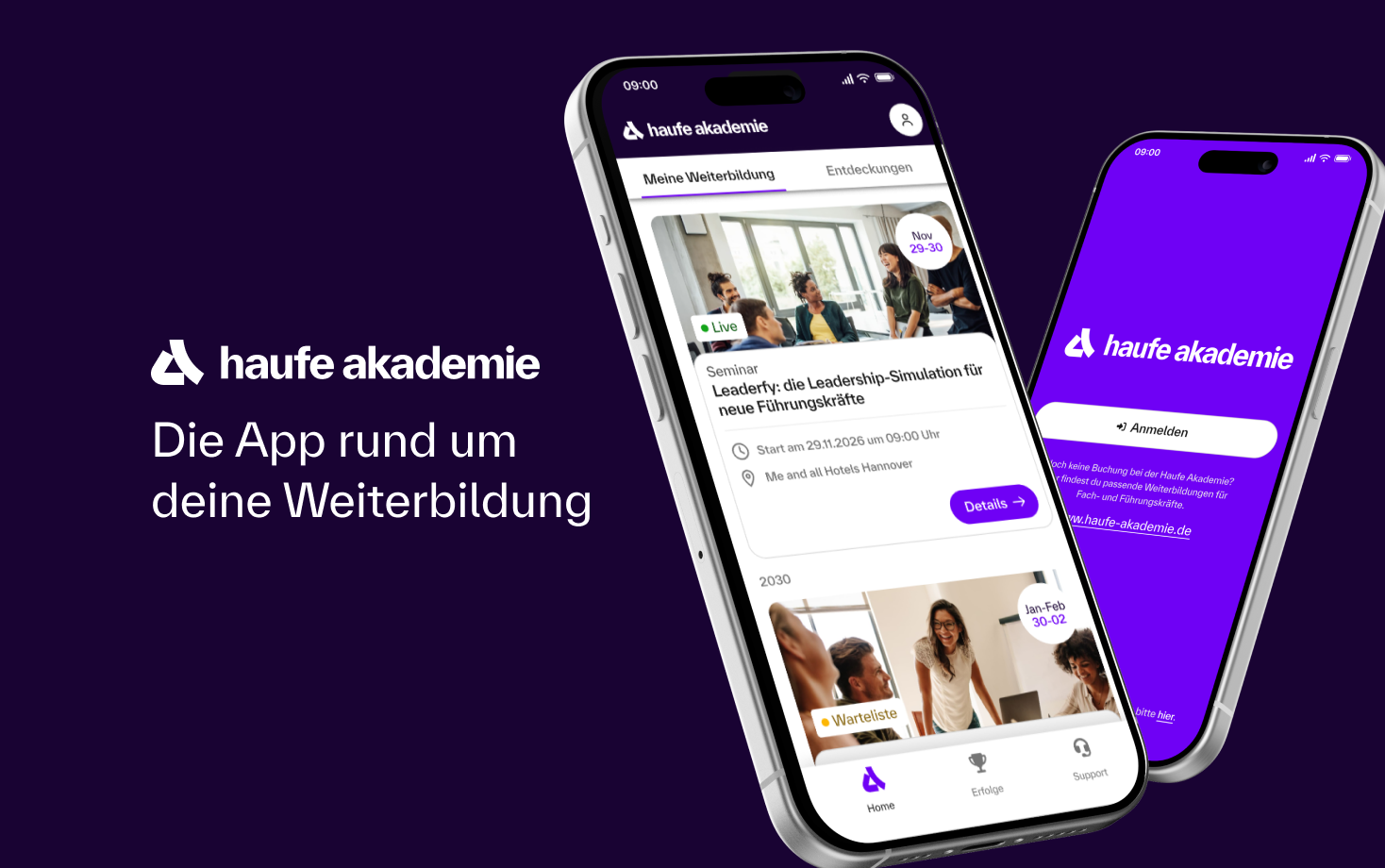
- Training app
- Business Solutions


