 4.4
4.4
Contents
Requirements for asset accounting with SAP
- Structuring of fixed assets.
- Linking the basics of business administration with SAP.
- SAP Asset Accounting and the interface to Purchasing and Financial Accounting.
- Parallel valuations and posting technology in financial accounting.
- The different user interfaces of the SAP GUI and transactions in R/3 and ERP, as well as Launchpad and apps in S/4HANA.
Organizational structure in asset accounting
- The valuation plan, use of different valuations from HGB to parallel accounting to indexed replacement values of controlling.
- Importance of asset classes for screen layout up to posting.
- The Concept of “New” Asset Accounting and Key Innovations in S/4HANA.
Master data
- Asset number, main and sub-numbering system.
- Easy opening of several systems in one step.
- Master record fields for targeted selection and a wide range of evaluations.
Processes
- Additions from financial and asset accounting.
- Integrated accesses from the order.
- Impairment and different types of disposals.
- Asset retirement via financial accounting with immediate posting of receivables and creation of correspondence.
- Rebooking and complex asset transfers.
- Investment Incentives and Their Reflection in the Valuation Plan.
- Subsequent capitalization and the distinction from subsequent acquisition accounting.
- down payment on assets and down payment on credit.
- Assets under construction, ranging from simple structures to the use of orders and projects with planned and budgeted values, through to the capitalization of the investment.
- Low-value assets, the collective tax item or the traditional method?
- Mass transactions using the example of outgoing goods and changes.
Closing activities and reporting
- Period and year-end closing processes in asset accounting.
- System inventory, system grid and other standard reports through to simulation.
- Individual list design, easy access to tables and databases, free design of the output format through to Excel integration.
- New reporting functionalities in S/4HANA, from the standard to the query designer.
IMPORTANT NOTE: This training NOT suitable for SAP Business One users!
Learning environment
In your online learning environment, you will find useful information, downloads and extra services for this training course once you have registered.
Your benefit
- You will acquire in-depth technical knowledge about the treatment of fixed assets in SAP.
- You will gain an overview of the options and processes in SAP - regardless of the program version.
- Whether using the classic SAP ERP or S/4HANA, the speaker will provide a direct comparison of tried-and-true methods and new approaches.
- Using clear practical examples, you will learn how to organize subledger accounting and manage reporting.
- Find out about the many advantages of asset posting with SAP and experience how it unfolds its full effect in the interplay of the integration of figures from purchasing and controlling.
- You will get to know both standard evaluations and new forms of reporting that enable valuable and in-depth analyses.
- This look into the world of S/4HANA provides insights into potential areas for optimization during the migration from an existing S/4 system to a new one.
- As a newcomer to SAP, you will receive valuable tips for implementation and setup.
Methods
Presentation, exchange of practical experiences, case studies in the SAP system, presentation with opportunities for discussion, examples of master data, postings, and reports in the various SAP systems.
Lecture, practical exchange, case studies in the SAP system Lecture with opportunities for discussion, examples of master data, postings and evaluations in the various SAP systems.
Recommended for
Specialists and managers in finance and accounting, asset accounting, the balance sheet department and from tax offices.

5491
- Customized training courses
- Direct application in practice
- Efficient use of time and resources
Ratings and feedback from our participants

Start dates and details


Tuesday, 21.07.2026
09:00 am - 5:00 pm






Thursday, 10.09.2026
09:00 am - 5:00 pm
- one joint lunch per full seminar day,
- Catering during breaks and
- extensive working documents.
Monday, 28.09.2026
09:00 am - 5:00 pm
Friday, 09.10.2026
09:00 am - 5:00 pm






Friday, 06.11.2026
09:00 am - 5:00 pm
- one joint lunch per full seminar day,
- Catering during breaks and
- extensive working documents.
Friday, 27.11.2026
09:00 am - 5:00 pm
Tuesday, 02.02.2027
09:00 am - 5:00 pm




Monday, 15.02.2027
09:00 am - 5:00 pm
- one joint lunch per full seminar day,
- Catering during breaks and
- extensive working documents.
Thursday, 04.03.2027
09:00 am - 5:00 pm
Training is guaranteed to take place- one joint lunch per full seminar day,
- Catering during breaks and
- extensive working documents.
About us - The Haufe Akademie
Your optimizer, innovator and companion since 1978 -
Your professional partner for professional development and seminars, training courses and topical conferences.
Whether on site, live online or in-house - our customised solutions, our claim to the highest level of consulting expertise and training tailored to your needs simplify the acquisition of skills for the working world of the future and sustainably facilitate professional development.
A wide range of seminars, individual coaching and our flexible formats support HR managers and decision-makers in shaping the future and developing employees, in-house teams and companies.
Experience the benefits of online training from the comfort of your own home. Our online formats meet the highest quality standards and are in no way inferior to face-to-face events in terms of practical relevance. Learn together live online in interactive groups or digitally at a time of your choice.
Do you have any questions?
We are there for you Monday to Friday 8:00 a.m. - 5:00 p.m.

Questions & Answers
In our Questions & Answers (FAQ) section, you will find all the answers and the most frequently asked questions about your selected topic.

Munzinger Str. 9
79111 Freiburg

- Planning security
- Free seminar places
- Quality standards
- Planning and locations
- Funding opportunities
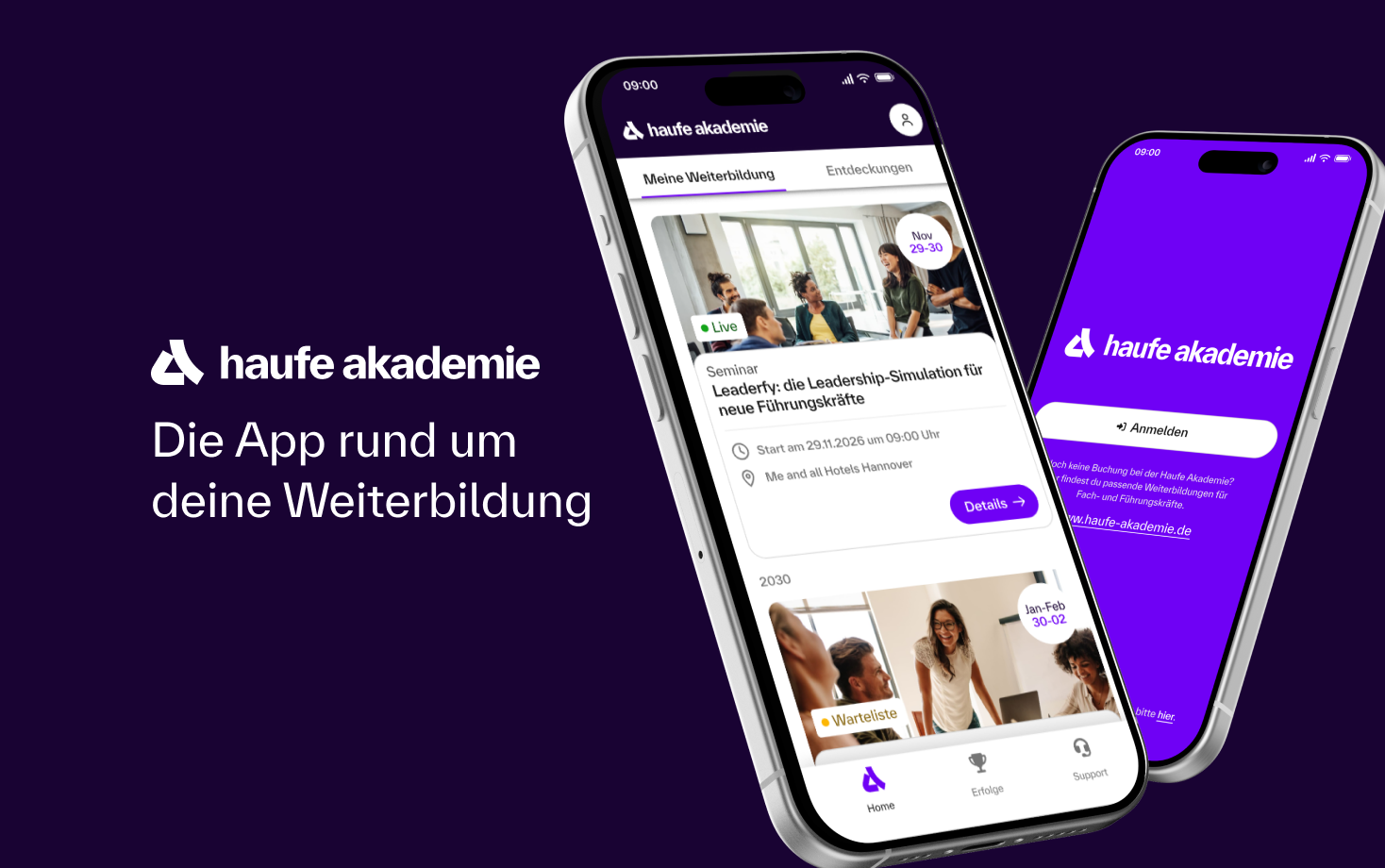
- Training app
- Business Solutions


