With our partner Inner Development Goals

With this perspective in mind, the global nonprofit initiative “Inner Development Goals” (IDGs) was founded in 2019. It brings together people from the academic and business communities worldwide around a common goal.
The vision: to develop the skills and qualities needed to achieve the United Nations’ 17 Sustainable Development Goals (SDGs).
IDG posed the central question to more than 1,000 participants worldwide: What skills do we as humans need to achieve the UN’s SDGs? The result: a comprehensive dataset for analyzing the relevant skills and qualities needed for personal growth.
The IDG Guide was developed based on a scientific analysis of this data. It encompasses 5 thematic dimensions with a total of 25 key sub-skills needed to achieve the SDGs—and is continuously being refined.
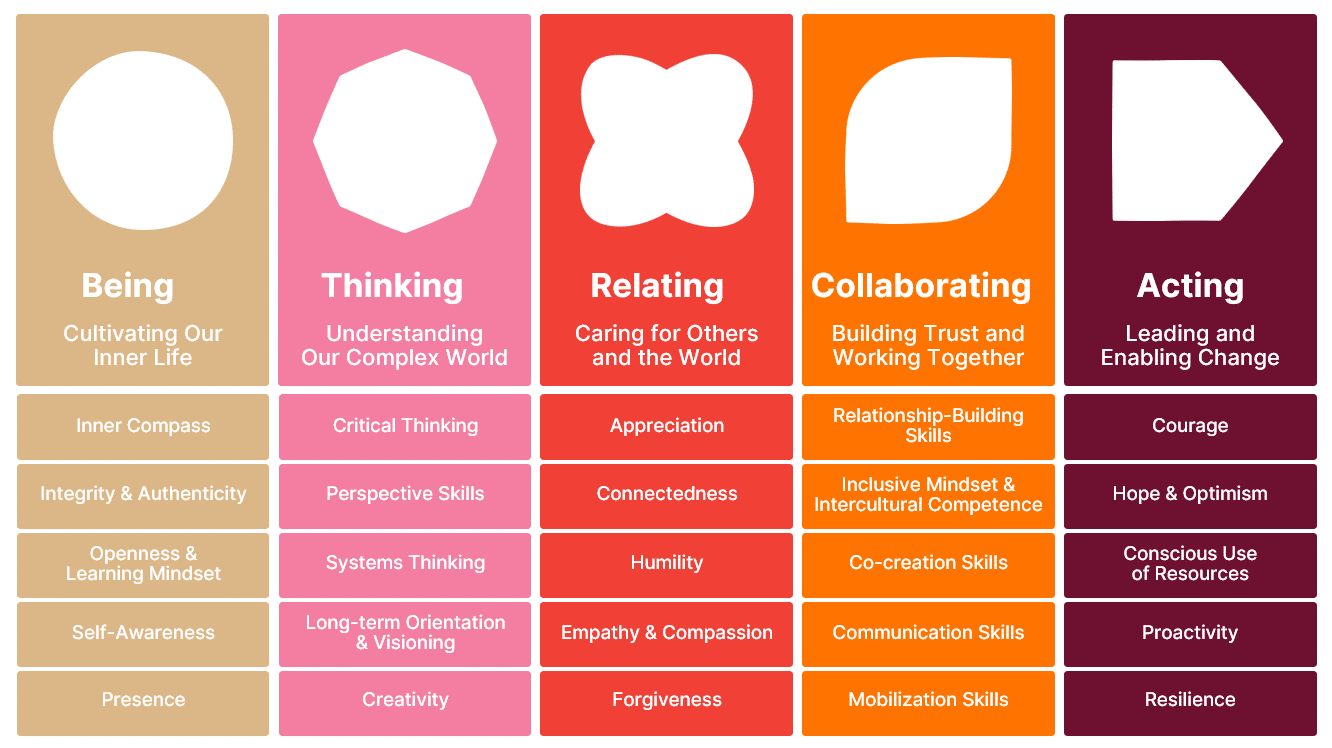
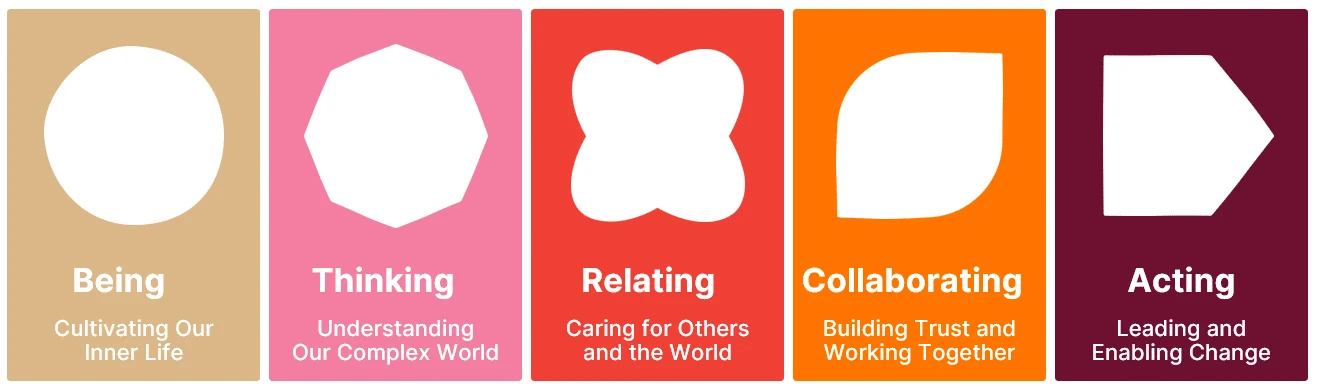
To be more mindful of what is going on inside me and how that relates to and interacts with my surroundings. This awareness fosters greater clarity about my/our goals and the ability to respond thoughtfully, even in complex situations.

A deep commitment to life. My values and goals also serve the common good and the greater good.

To act with sincerity and honesty, guided by my deeply held values.
Curiosity and a flexible willingness to exchange perspectives, to allow myself to be vulnerable, to embrace change, and to grow.

Reflection on my thoughts, feelings, desires, and actions, as well as my self-image. The ability to self-regulate.

Openness to being in the here and now, accepting reality as it is at this moment, and responding to it in a meaningful way.
Clarity and an openness to different perspectives, with an eye toward the long-term consequences of our actions. This helps me deal with complex situations and make sustainable decisions in our interconnected world.

Critically reflect on views, evidence, and plans.

Actively and meaningfully applying insights from different perspectives. Learning from them.

Understand complexities and work with the interrelationships and properties of systems.

Develop and focus on long-term goals to promote the common good and ecological well-being.

Think outside the box, identify new possibilities, and turn them into actionable ideas.
Appreciation, compassion, and a sense of connection with people, future generations, the planet, and myself. These attitudes help me create a more just, inclusive, and sustainable world for everyone.

To approach myself and the world with a deep sense of gratitude, joy, appreciation, and recognition.

A strong sense of being part of—and connected to—a greater whole (humanity, life, and the global ecosystem).

The ability to act in a way that is appropriate to the situation, without putting my own status, needs, or ego first.

To treat other people, myself, and nature with kindness, empathy, and compassion, and to respond sensitively to existing suffering and/or to alleviate it.

The willingness to overcome hostility, process trauma, and create space for healing.
Building trusting relationships, recognizing different values, abilities, and perspectives, and creating safe spaces: This is how we can achieve shared goals and make a shared impact.

Building and maintaining relationships with emotional intelligence, based on trust, respect, mutual understanding, and a willingness to collaborate.

Embrace and respect diversity while including people and communities with different perspectives and backgrounds.

Promoting collaborative processes with various stakeholders, based on teamwork and psychological safety, with an awareness of power dynamics.

Truly listening to others, fostering genuine dialogue, skillfully expressing one's own views, managing conflicts constructively, and adapting communication to different groups.

To inspire and empower others to commit to shared goals and visions and to collective action.
Moving forward with courage and optimism. Working together to develop the capacity to act and taking action with purpose and perseverance. That is how visions become meaningful changes—especially in uncertain times.

Standing up for fundamental values, making decisions, taking action, and, when necessary, questioning and changing established structures and views.

A positive attitude toward and confidence in the possibility of change toward a more just, inclusive, and sustainable community and future.

Act with an awareness of limited resources (people and the planet), focus on conservation, regeneration, and frugality, and avoid harmful consumption.

A forward-looking and responsible approach based on solidarity and respect for human dignity and the world.

Tackle adversity and obstacles with flexibility, dedication, patience, and perseverance, even when progress is slow or uncertain.
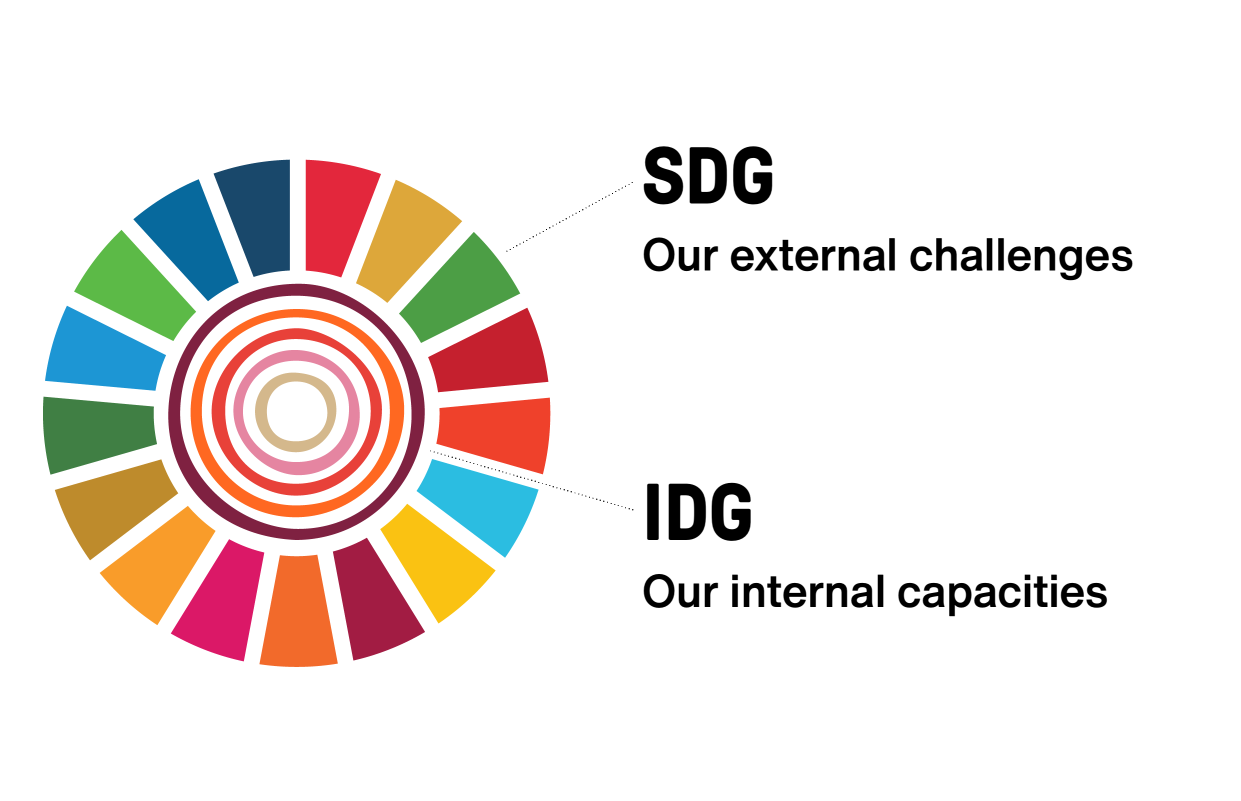
A future worth living can be achieved if we, as people, continue to grow and develop. That is the conviction of the IDG Initiative.
We share this vision. Our mission is to facilitate development. For many years, Haufe Akademie has been supporting people and organizations in building a secure and fulfilling future.
Much of our existing portfolio contributes to this goal, and we are continuing to strengthen our efforts in this direction. This includes, above all, our Be6! Leadership Circle. That is why the IDGs are an important partner for inspiration and exchange.
How can we shape a peaceful and responsible future with the help of IDG? By starting where we can truly make a difference: with children and teens. And with the people who support them. Learn more about our IDG@School project.
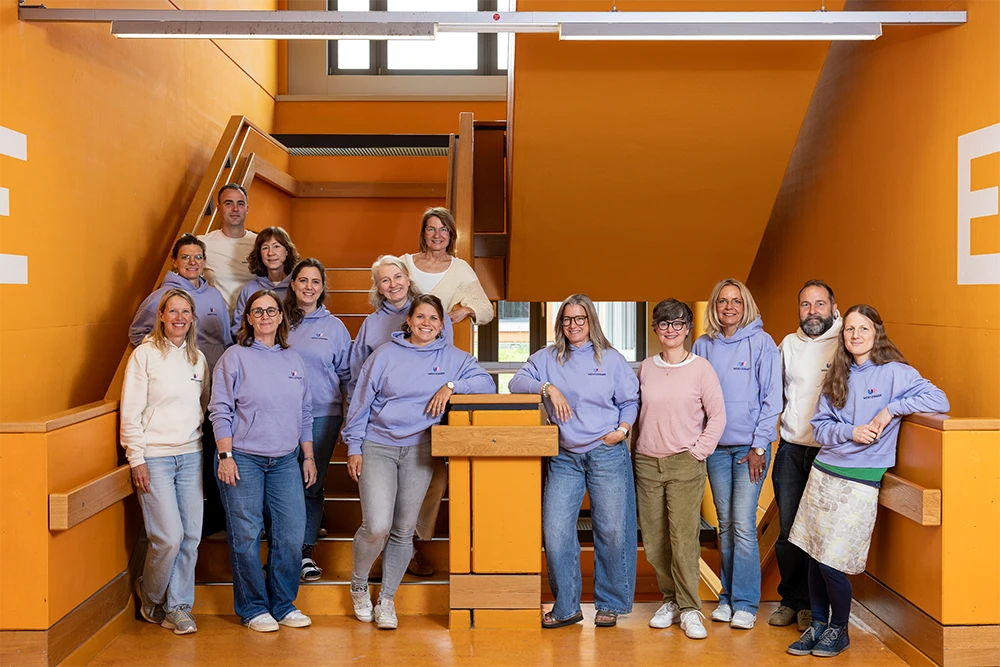
Through co-creation and a wide variety of events and formats, experts and researchers from the IDG demonstrate and explain how we can develop the skills needed to achieve the United Nations’ SDGs. A key focus here is offering development opportunities for everyone and making them “open source.”
Companies such as IKEA, Stena Line, Novartis, Google, and Icebug integrate IDG’s scientific findings into their day-to-day operations. Their case studies provide inspiration and motivation to get started on your own.
The first IDGs Summit was filled with a spirit of optimism, personal conversations and exchanges with our IDG partners, scientists and experts from all over the world. Unexpectedly for us: we encountered contagious passion and a lot of motivation for a goal. See and hear for yourself.



That’s what the University of Amsterdam calls its toolbox for learning about IDG skills. The result is a comprehensive toolkit featuring open-source exercises, information, and team and self-reflection activities covering all IDG dimensions and IDG skills.
Carefully selected e-learning courses provide practical knowledge to help align environmental and economic goals.
Through this survey, IDGs around the world are identifying the skills needed for a future worth living. It’s worth participating to help achieve the Sustainable Development Goals.
With professional development programs designed to help you successfully overcome this challenge.

experts always provides up-to-date information here on important and new topics related to sustainability-oriented business practices.

About skills that are important for a sustainable economy, their legal basis and how to implement them successfully in the company.
.jpeg)
How can companies and individuals take steps to achieve the SDGs in collaboration with the IDGs? This podcast explores that question.
.png)
Where do I start, and how do I create the ideal IDG engagement in line with my strategy and my organization's goals? Here, companies share insights from their own experiences.

Shaping tomorrow's leadership - a practical introduction to the Haufe B6! Leadership Framework with an excursus on the IDGs.
We look forward to your message