Select AI tools specifically and use them productively
Smart business with artificial intelligence: the path to the optimal tool decision
 4.2
4.2
Contents
Orientation in the AI tool landscape
- Introduction to different categories of AI tools (e.g. text development, research, image/video creation).
- Get to know relevant tools such as ChatGPT, Gemini, Midjourney, Gamma DeepSeek, Claude, Sora & Co - based on concrete use cases.
- Develop criteria: How do you assess the quality, benefits and risks of the tools?
AI tools on the test bench: test, compare, evaluate
- Practical tests of selected tools on real tasks.
- Compare the results of different tools according to criteria such as increased efficiency or error reduction.
- Exchange in small groups: Sharing experiences and learning from each other.
Increasing efficiency in a practical test: rethinking your own tasks
- Development of individual roadmaps for tool integration into existing work processes.
- Which tasks are particularly suitable for the use of AI?
- Checklist for evaluating suitable tools.
- Definition of suitable implementation strategies in the team/company.
Safety net for AI applications: Identifying and minimizing risks
- Identification of typical risks such as biases or incorrect data interpretations.
- Clarifying data protection issues: How can I protect sensitive information?
- Create a catalog of measures:
- Reduction of potential sources of error.
- Ensuring internal security guidelines.
Learning environment
In your online learning environment, you will find useful information, downloads and extra services for this training course once you have registered.
After training you can:
- Understand the basic functions of modern AI applications and confidently implement the first steps in dealing with them.
- Select relevant tools based on your professional requirements and evaluate their possible uses.
- Develop initial approaches for productive workflows and recognize efficiency potential.
- Identify typical risks and consider data protection-compliant measures.
- Create a clear plan to prepare for the use of AI technologies in your company.
Methods
- Interactive presentations with practical examples from various industries.
- Hands-on sessions for independent testing of the tools presented.
- Group work with digitally supported reflection methods.
- Individual creation of a roadmap for personal tool use in everyday working life.
Note
Many different tools will be introduced during the course. Active use of these tools is voluntary and not a prerequisite for participation. Access to an AI tool from your professional environment facilitates the practical exercises.
Tools
Recommended for
The training is aimed at managers from operational areas as well as IT managers, digitalization managers and project managers with a focus on efficient work processes. It is also particularly suitable for employees in data-driven roles such as analysts, marketing managers, product developers and controllers.
- Customized training courses
- Direct application in practice
- Efficient use of time and resources
Ratings and feedback from our participants

Start dates and details


Monday, 07.09.2026
09:00 am - 5:00 pm

Friday, 11.12.2026
09:00 am - 5:00 pm
Friday, 26.02.2027
09:00 am - 5:00 pm
Training is guaranteed to take placeThe next booking ensures this course will take placeFrequently Asked Questions (FAQ)
You will learn how to navigate the complex landscape of AI tools, identify the right tools for your area of responsibility, and evaluate their use according to practical criteria such as efficiency, benefits, and risk. Using concrete examples and your own tasks, you will develop practical strategies for integrating AI into your work processes, which will help you use AI in a more targeted and productive way.
You will learn methods for using AI tools specifically to make work processes more efficient, make strategic decisions about integration, and identify risks such as bias or data protection issues. This will enable you to guide your team safely through digital transformation processes and leverage the potential of AI in a sustainable way.
A key focus of the seminar is on identifying and understanding typical risks such as distortions in results and data protection issues, and developing measures to reduce these risks. This will teach you how to use AI responsibly and in compliance with the law.
This training specifically on selecting and productively using AI tools in everyday work and combines practical tool experience with evaluation criteria and implementation strategies, while other AI seminars tend to cover general basics, ethical aspects, or specific subject areas (e.g., marketing, controlling).
About us - The Haufe Akademie
Your optimizer, innovator and companion since 1978 -
Your professional partner for professional development and seminars, training courses and topical conferences.
Whether on site, live online or in-house - our customised solutions, our claim to the highest level of consulting expertise and training tailored to your needs simplify the acquisition of skills for the working world of the future and sustainably facilitate professional development.
A wide range of seminars, individual coaching and our flexible formats support HR managers and decision-makers in shaping the future and developing employees, in-house teams and companies.
Experience the benefits of online training from the comfort of your own home. Our online formats meet the highest quality standards and are in no way inferior to face-to-face events in terms of practical relevance. Learn together live online in interactive groups or digitally at a time of your choice.
Do you have any questions?
We are there for you Monday to Friday 8:00 a.m. - 5:00 p.m.

Questions & Answers
In our Questions & Answers (FAQ) section, you will find all the answers and the most frequently asked questions about your selected topic.

Munzinger Str. 9
79111 Freiburg

- Planning security
- Free seminar places
- Quality standards
- Planning and locations
- Funding opportunities
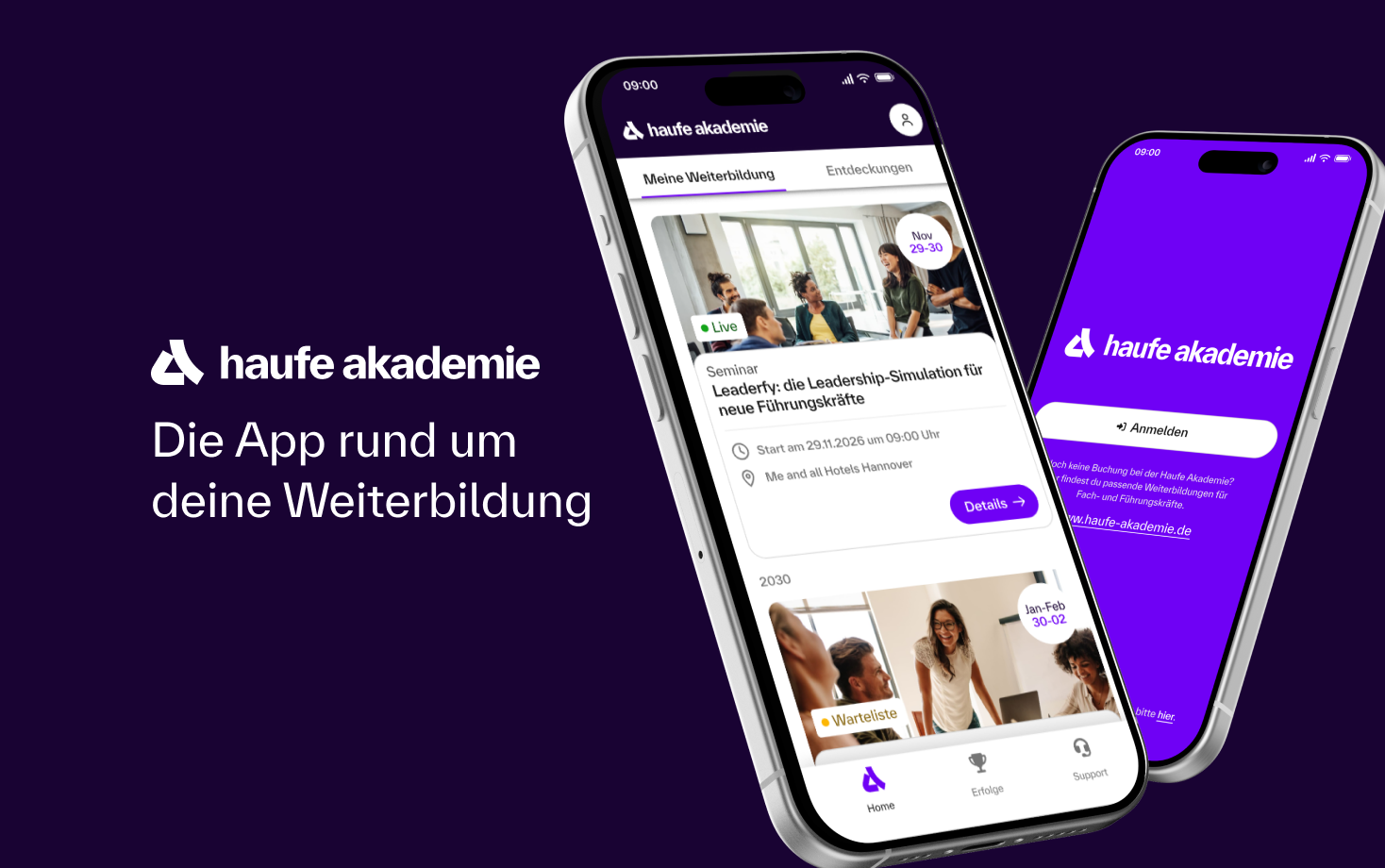
- Training app
- Business Solutions


