Understanding and using data: Your introduction to data literacy
Get AI-Ready—with Solid Data Literacy as Your Foundation

Strategy & basics
- Discover what you can do with data in your workspace.
- Learn about the building blocks of data processing: the foundation of every AI application.
- Develop a structured approach for data-based decisions.
The structured data process
- Introduction to the CRISP-DM Model—a proven step-by-step method for data projects and AI initiatives.
Collect data: Source, structure & quality
- Identify relevant data sources and evaluate their quality.
- Identify biases early on.
- Exercise: Analyze the sample data for bias.
Types of data analysis
- The Four Stages of Analysis—From Description to Prediction.
- Interpreting Numbers Correctly: Be Careful with "Averages"!
- Choose the chart that best fits your question.
- Exercise: Create meaningful visualizations and work with a dashboard.
Communication: Visualization & storytelling
- Avoid misleading representations through clear visualizations.
- Tell compelling stories with your data results.
Ethical handling of data
- Fairness, Bias, and Data Protection: The GDPR and the EU AI Act Explained in Simple Terms.
- Why Ethical Data Literacy Is Essential for the Responsible Use of AI.
Summary & action plan
- Develop concrete steps to integrate data literacy and AI tools into your daily work.
In your online learning environment, you will find useful information, downloads and extra services for this training course once you have registered.
- Plan and implement the first steps of the CRISP-DM process independently.
- Evaluating Data Sources—and Understanding Why This Is Crucial for AI Applications.
- Identifying and Avoiding Bias—in Data and in AI Results.
- Create meaningful diagrams and perform visual analyses.
- Communicate clearly with “data storytelling”—whether within a team or in front of stakeholders.
- Identify the fundamental principles of data protection, bias, and the EU AI Act, as well as typical risks.
Presentations are interspersed with group work, interactive exercises, and workshop sessions. Theory, discussion, and hands-on application ensure that you gain knowledge you can put to use right away.
- Employees without prior technical knowledge who want to make their work more data-driven and AI-ready.
- Professionals in marketing, controlling, or HR who regularly work with reports and data.
- Executives and project managers who want to better understand and manage data-driven and AI-powered decisions.
No prior technical knowledge required! The focus is on easy-to-understand concepts and hands-on application—as the first step on your journey toward AI proficiency. The course teaches data literacy—no prompting, no coding.
42318
- Customized training courses
- Direct application in practice
- Efficient use of time and resources

Start dates and details







Monday, 02.11.2026
09:00 am - 5:00 pm
Tuesday, 03.11.2026
08:30 am - 12:30 pm
- one joint lunch per full seminar day,
- Catering during breaks and
- extensive working documents.

Thursday, 04.02.2027
09:00 am - 5:00 pm
Friday, 05.02.2027
08:30 am - 12:30 pm







Thursday, June 17, 2027
08:30 am - 12:30 pm
Friday, June 18, 2027
09:00 am - 5:00 pm
- one joint lunch per full seminar day,
- Catering during breaks and
- extensive working documents.
Tuesday, September 21, 2027
09:00 am - 5:00 pm
Wednesday, September 22, 2027
08:30 am - 12:30 pm
- one joint lunch per full seminar day,
- Catering during breaks and
- extensive working documents.
Frequently Asked Questions (FAQ)
The training practical exercises for analyzing, visualizing, and communicating data. You will practice with sample data, create charts, and learn how to present results in a clear and understandable way. This will enable you to apply what you learn directly in your everyday work.
You don't need any prior technical knowledge. The training structured in such a way that the basics of data work are taught in an understandable way, so that even beginners can develop a solid understanding of data processes and tools.
After the training , you training independently plan the first steps of a structured data process, identify suitable data sources, and evaluate data quality. These skills will help you approach data-based projects methodically and implement them more successfully.
You will not only gain theoretical knowledge, but also practical exercises and an action plan that you can apply directly in your everyday work. This will enable you to continuously improve your data skills and successfully master data-based challenges in your profession.
Data literacy is important for many professional roles today, especially if you regularly deal with numbers, reports, or decisions. This includes employees without prior technical knowledge, specialists in areas such as marketing, controlling, or HR, and managers or project leaders who need to understand or steer data-based discussions. The training you training practical knowledge so that you can confidently tackle data-based issues and communicate better within your team.
About us - The Haufe Akademie
Your optimizer, innovator and companion since 1978 -
Your professional partner for professional development and seminars, training courses and topical conferences.
Whether on site, live online or in-house - our customised solutions, our claim to the highest level of consulting expertise and training tailored to your needs simplify the acquisition of skills for the working world of the future and sustainably facilitate professional development.
A wide range of seminars, individual coaching and our flexible formats support HR managers and decision-makers in shaping the future and developing employees, in-house teams and companies.
Experience the benefits of online training from the comfort of your own home. Our online formats meet the highest quality standards and are in no way inferior to face-to-face events in terms of practical relevance. Learn together live online in interactive groups or digitally at a time of your choice.
Do you have any questions?
We are there for you Monday to Friday 8:00 a.m. - 5:00 p.m.

Questions & Answers
In our Questions & Answers (FAQ) section, you will find all the answers and the most frequently asked questions about your selected topic.

Munzinger Str. 9
79111 Freiburg

- Planning security
- Free seminar places
- Quality standards
- Planning and locations
- Funding opportunities
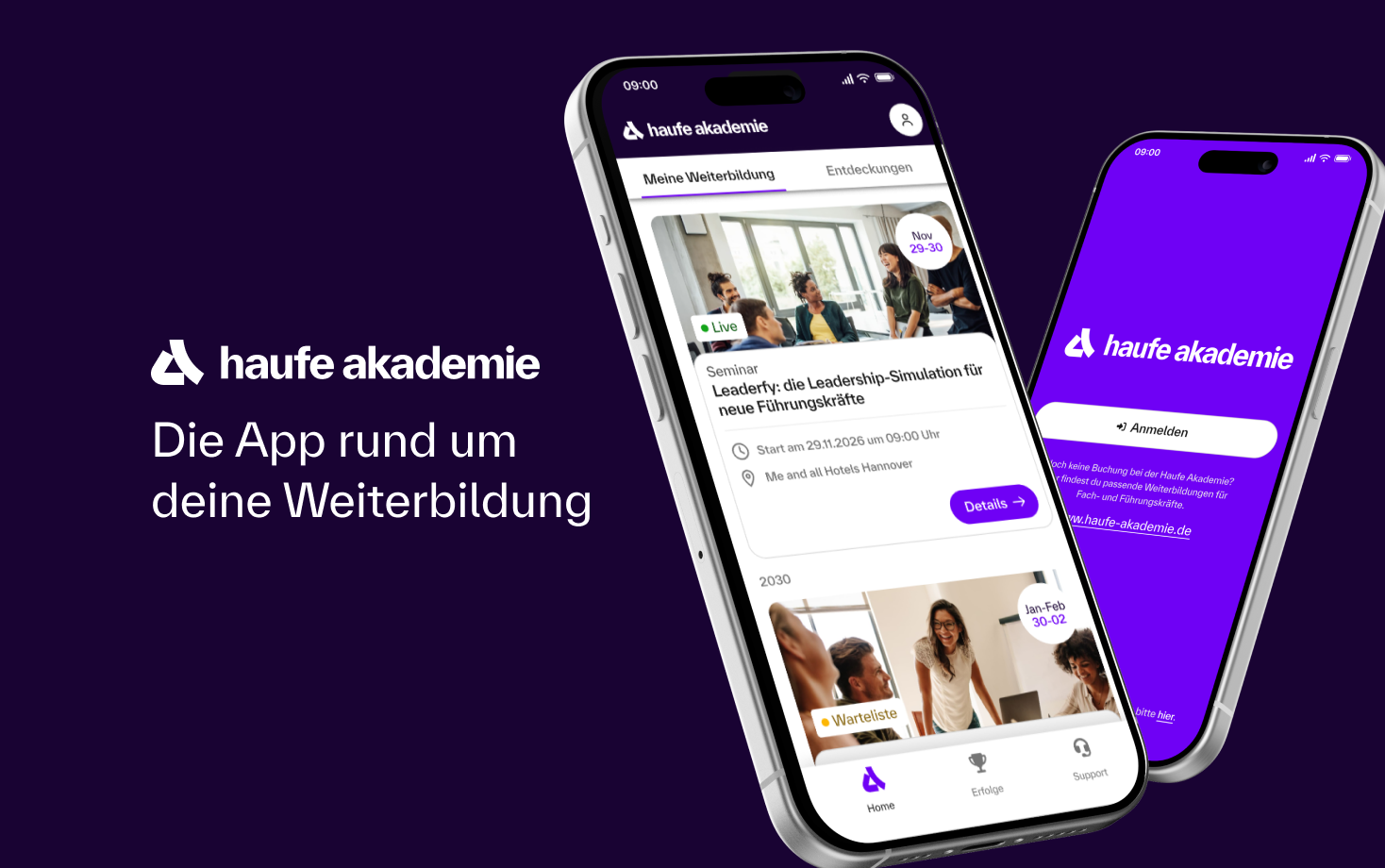
- Training app
- Business Solutions


