4.3
With certificate
Upon successful completion, you will receive a recognized certificate that documents your newly acquired skills.


This further training course was designed in cooperation with the Mannheim University of Applied Management Sciences and meets the university's quality standards in terms of overall concept, content, trainers and examination. As a result, participants benefit from high-quality qualifications with guaranteed topicality, high practical relevance and excellent trainers.
Artificial intelligence in product management — practical and applicable.
Strategic analyses.
Further information:
Classroom training 1 (2 days):
Modern product management: basics
Artificial intelligence in product management – practical and applicable
Strategic analyses
Strategic decisions in product management
E-learning: market and competition analysis
Classroom training 2 (3 days):
Implementation in the marketing
Information management: market research and performance review
The product marketing plan
Controlling
E-learning: Conflict management
Final exam (approx. 60 min.)
You document your expertise with the e-test.
In your online learning environment, you will find useful information, downloads and extra services for this training course once you have registered.
Input, case studies, individual and group work, discussions, exchange of experience, best-practice examples.
product managers and newcomers.
After completing the training, you will take a written e-exam. To save travel costs and time, you can take this exam on your computer at home or at work. The exam covers the content of the two classroom modules (time required: approx. 60 minutes). After successfully completing the final exam, you will receive the recognized certificate from Haufe Akademie the Mannheim University of Applied Sciences for Management, "certified product manager."


The fee includes the costs for further training, e-examination, documents, lunch and refreshments during breaks.
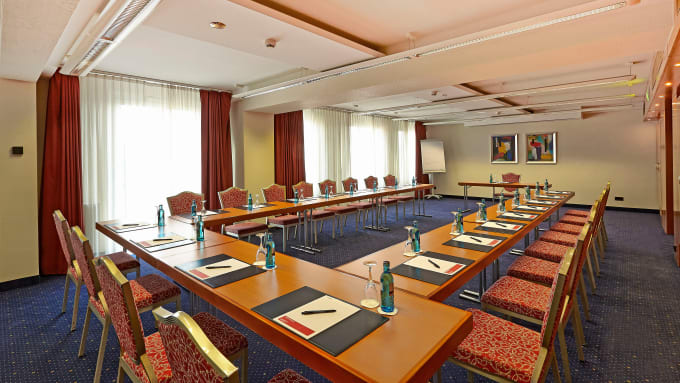
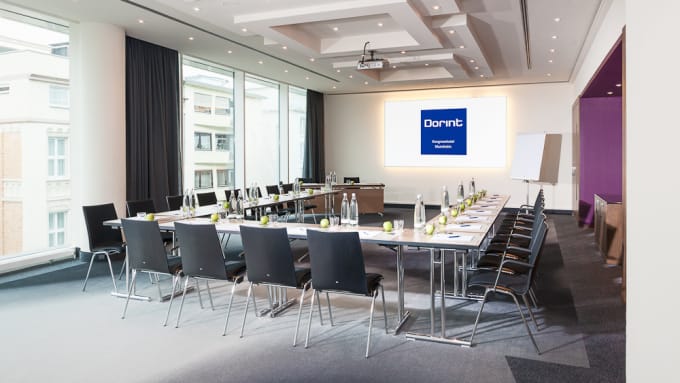
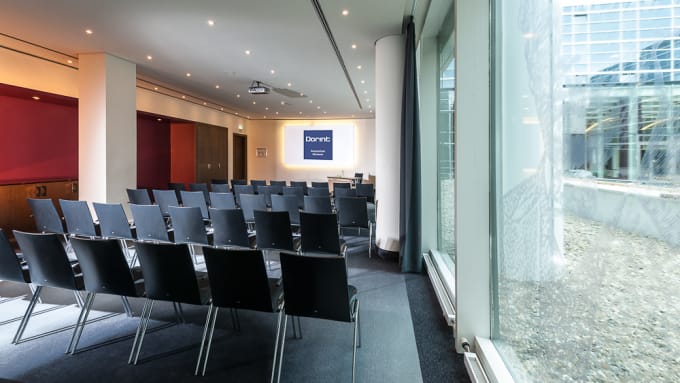
Please book your overnight stay directly with the hotel at our special rates approx. 4 weeks before arrival. You will receive a reservation form from us after your registration.
The fee includes the costs for further training, e-examination, documents, lunch and refreshments during breaks.
Please book your overnight stay directly with the hotel at our special rates approx. 4 weeks before arrival. You will receive a reservation form from us after your registration.
The fee includes the costs for further training, e-examination, documents, lunch and refreshments during breaks.
Please book your overnight stay directly with the hotel at our special rates approx. 4 weeks before arrival. You will receive a reservation form from us after your registration.
The fee includes the costs for further training, e-examination, documents, lunch and refreshments during breaks.
Please book your overnight stay directly with the hotel at our special rates approx. 4 weeks before arrival. You will receive a reservation form from us after your registration.
Training is guaranteed to take placeThe fee includes the costs for further training, e-examination, documents, lunch and refreshments during breaks.
Please book your overnight stay directly with the hotel at our special rates approx. 4 weeks before arrival. You will receive a reservation form from us after your registration.
product managers You are responsible for a product or product line—from positioning and market launch to evaluating its financial success. You work at the intersection of the market, sales, development, and management. In this training program, you’ll learn about the responsibilities of this role in various companies and how to manage stakeholders and interfaces.
A five-step approach has proven effective:
Define your market: Which customer groups, regions, and applications are part of your market?
Determining Market Metrics: Market Potential, Market Volume, and Your Own Market Share
Understanding Purchasing Behavior: Who makes the decisions, based on what criteria, and how does this differ between B2B and B2C?
Analyzing Competition: Industry Forces Using the Five Forces Analysis; Direct Competitors Using Benchmarking
Gathering Data: Combining Existing Sources, Such as Studies and Industry Association Data, with Our Own Market Research
Based on the results, you can identify the opportunities and risks for your product. During the training, you'll practice these steps using case studies, and an e-learning module will help you apply them to your own market afterward.
Positioning means determining who your product is for and why it’s a better fit for that target audience than the alternatives. Useful tools for this include an expanded SWOT matrix to link strengths with market opportunities, portfolio methods to see where the product fits within the overall product lineup, and a strategy map to align the positioning with the company’s goals. The Business Canvas shows whether the business model is a good fit.
During the training, you'll try out these tools on real-life cases. That way, you'll quickly realize which ones actually make decision-making easier in your day-to-day work.
The marketing mix encompasses your decisions regarding product, price, distribution, and communication. In everyday terms, this means, for example: Which variants do we offer, at what price and under what terms, through which channels do we sell, and with what messages and media do we reach our target audience? These decisions must be consistent with one another. A premium product offered at a discount in a discount store sends mixed signals.
During the training program, you'll cover all four areas, right up to media planning and agency briefings. At the end, you'll summarize everything in a product marketing plan for your own product.
These are the instruments you'll use most often in your daily life:
Contribution margin analysis to see which products are profitable
Break-even analysis to determine the quantity at which a product or initiative becomes profitable
Cost Estimation and Cost Management to Control Prices and Costs
Key metrics such as market share, revenue growth, and contribution margin per product
This will allow you to present a data-driven case to management and the sales team. During the training, you'll work through examples using these tools and see how AI can help with analyses and reports.
Good starting points are tasks that involve condensing a lot of information: market and competitive research, analyzing customer feedback, preparing for client meetings, creating initial drafts of concepts and copy, or assisting with media planning. You should always check the results yourself, because AI provides answers that sound plausible but may still be incorrect.
In this training course, you'll explore specific use cases from product management and determine where AI can save you time in your role and where it's better for you to make decisions on your own.
A product marketing plan typically follows this sequence: analysis of the market and competition, objectives, target audiences, and positioning; marketing mix strategies with a budget and timeline; and, finally, KPIs for measuring success. It is important that the plan be regularly updated with new market data and not be shelved after approval.
In this training course, you'll develop such a plan step by step. So you'll go home with a template that you can use right away for your product.
This e-learning course shows you how conflicts arise, how to recognize them early on, and how to address them before they escalate. This is especially important in product management because you’re constantly mediating between sales, development, and management, whose goals often conflict.
Both e-learning courses in the continuing education program—Conflict Management and Market and Competitive Analysis—are available to you free of charge for twelve months. So you can review the material when the next difficult coordination meeting comes up.
No. This continuing education program is specifically designed for career changers in sales, marketing, development, or project management. If you already work in product management, you’ll be able to reorganize your knowledge and fill in any gaps.
It's precisely this mix that makes the group so interesting. You'll work on case studies, individual assignments, and group projects, and learn how other industries solve the same problems.
The training program consists of five days divided into two modules (two and three days), two e-learning courses, and an online exam lasting approximately 60 minutes. It takes place in person or as a live online training session.
After passing the exam, you will receive the certificate “certified product manager ” from the German Association for Continuing Education ( Haufe Akademie ) and the University of Applied Sciences for Management (HdWM) in Mannheim, as well as an open badge for your profile. If you wish to continue your studies afterward, the “ certified Senior product manager” or “certified AI Expert in Product Management” programs are direct next steps.
Your optimizer, innovator and companion since 1978 -
Your professional partner for professional development and seminars, training courses and topical conferences.
Whether on site, live online or in-house - our customised solutions, our claim to the highest level of consulting expertise and training tailored to your needs simplify the acquisition of skills for the working world of the future and sustainably facilitate professional development.
A wide range of seminars, individual coaching and our flexible formats support HR managers and decision-makers in shaping the future and developing employees, in-house teams and companies.
Experience the benefits of online training from the comfort of your own home. Our online formats meet the highest quality standards and are in no way inferior to face-to-face events in terms of practical relevance. Learn together live online in interactive groups or digitally at a time of your choice.
We are there for you Monday to Friday 8:00 a.m. - 5:00 p.m.
In our Questions & Answers (FAQ) section, you will find all the answers and the most frequently asked questions about your selected topic.