With rap to quick-wittedness - master the fast counterattack
Score points with wordplay and freestyle techniques
 4.7
4.7
 Do you have the Courage, establishmenttion upside down?
With the rethink training courses, you change your mindset and discover new horizons.
Basics of spontaneous communication
- Spontaneity can be trained.
- Structuring the conversation with musical means.
- Rap as a means of communication and how you can use it to improve your repartee.
- The basics of creative word finding.
- Associative thinking and reacting.
Methods of repartee
- Warm-ups for physical and vocal preparation.
- Rhyming structures as a tool for flexible thinking.
- Spontaneous communication in association games.
- Argumentation techniques in improvised debates.
- Techniques for precise and convincing articulation.
Practical application in discussion and presentation
- Structuring arguments for a clear positioning.
- Use of punchlines for more expressiveness.
- Development and consolidation of your own thesis.
- Confident appearance by controlling your own voice.
- Application of rap techniques in stressful or challenging situations.
Associative thinking and speaking
- Freestyle methods for expanding vocabulary.
- Strategies for skillful topic redirection.
- Interactive "Friendly Battle" to strengthen argumentation skills
In your online learning environment, you will find useful information, downloads and extra services for this training course once you have registered.
The attendees
- improve their spontaneity and argumentation skills.
- increase their confidence in challenging conversations.
- strengthen their own presentation skills.
- Communicate clearly and precisely in professional contexts.
Practice-oriented exercises with direct feedback, group and individual work to deepen the content, live demonstrations by experienced trainers and reflection and transfer into everyday working life, plus lots of music and fun.
Specialists and managers as well as anyone who wants to improve their communication skills in spontaneous situations and is open to new methods and approaches.
Questions about the seminar content
Quick-wittedness doesn’t mean saying anything as fast as possible. What matters is being able to formulate a clear thought—even under time pressure—and express it precisely. In the “ training ,” you’ll practice exactly this skill using methods of spontaneous communication, creative word selection, and associative thinking. Rap and freestyle are used as unconventional training tools to help you make linguistic connections more quickly. This helps you, for example, when you’re unexpectedly asked for your opinion in a meeting or need to respond to an objection on short notice. Through repeated practice in spontaneous expression, you’ll gain more confidence and be able to respond convincingly even without extensive preparation.
Under pressure, attention often focuses more on the attack than on your own response. That’s why it helps to specifically train your ability to think on your feet and to learn various ways to respond. That’s why, in the “ training ” course, you’ll practice—among other things—improvised conversation scenarios, association games, and responding with well-reasoned arguments. This will help you learn to let surprising statements throw you off less easily. At the same time, the goal isn’t to outdo your conversation partner with a particularly sharp retort. Rather, you’ll develop the ability to remain composed, clearly articulate your position , and steer the conversation back to a factual level.
Even without preparation, you can come across as convincing if you’ve learned to organize your thoughts quickly. To do this, you need less memorized phrasing and more of a flexible mindset and a clear structure for your arguments. In the seminar’s improvised debates, you’ll practice taking a position spontaneously, developing appropriate arguments, and responding to counterarguments. Creative methods such as associations and rhyming structures help you find new connections in language and content more quickly. This will support you in meetings, negotiations, or discussions where the direction of the conversation changes unexpectedly.
A compelling statement is often not made any better simply by making it more detailed. In everyday professional life, what matters most is making the core of a message quickly recognizable. Especially in meetings, presentations, or discussions, overly complicated phrasing can cause the actual message to get lost. That’s why thetraining trains participants in precise articulation, clear argumentation structures, and the targeted use of pithy phrasing. Punchlines are also used as a method to distill ideas down to their essential content.
If your statement is unexpectedly criticized during a meeting or presentation, you may quickly feel the need to defend yourself right away. However, composure means first remaining capable of acting and then responding thoughtfully.
That’s why, in the “ training ” course, you’ll practice quickly structuring your arguments and clearly articulating your own “ position ,” as well as responding flexibly to unexpected statements without losing the thread of the conversation. Through practical exercises and immediate feedback, you can try out different responses. This will help you develop greater confidence in situations where your professional opinion, a decision, or a suggestion is spontaneously challenged.
- Customized training courses
- Direct application in practice
- Efficient use of time and resources
Further recommendations for "With rap to quick-wittedness - master the fast counterattack"
Ratings and feedback from our participants

Start dates and details





Tuesday, 10.11.2026
09:00 am - 5:30 pm
Wednesday, 11.11.2026
09:00 am - 5:00 pm
- one joint lunch per full seminar day,
- Catering during breaks and
- extensive working documents.




Tuesday, April 20, 2027
09:00 am - 5:30 pm
Wednesday, April 21, 2027
09:00 am - 5:00 pm
- one joint lunch per full seminar day,
- Catering during breaks and
- extensive working documents.

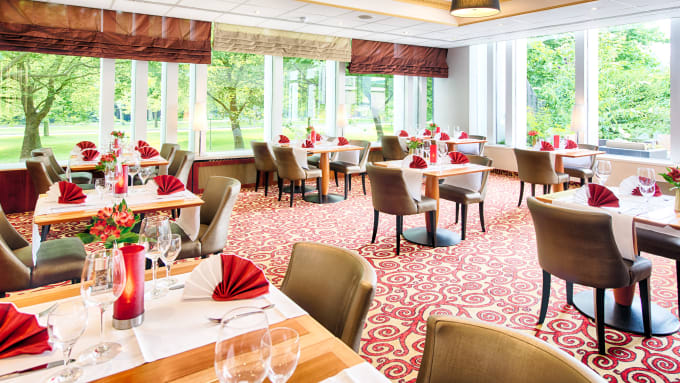
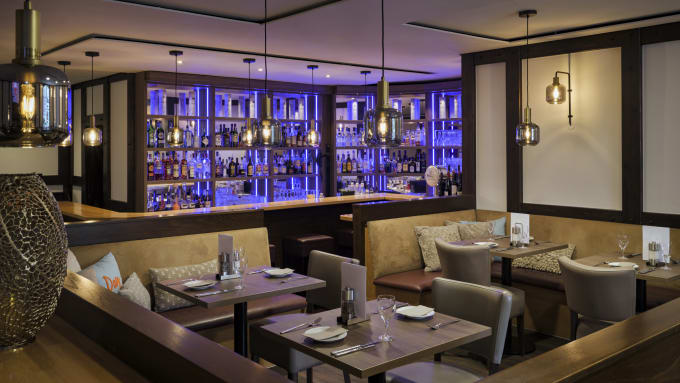


Tuesday, October 5, 2027
09:00 am - 5:30 pm
Wednesday, October 6, 2027
09:00 am - 5:00 pm
- one joint lunch per full seminar day,
- Catering during breaks and
- extensive working documents.
- one joint lunch per full seminar day,
- Catering during breaks and
- extensive working documents.
- one joint lunch per full seminar day,
- Catering during breaks and
- extensive working documents.
You might also be interested in:
About us - The Haufe Akademie
Your optimizer, innovator and companion since 1978 -
Your professional partner for professional development and seminars, training courses and topical conferences.
Whether on site, live online or in-house - our customised solutions, our claim to the highest level of consulting expertise and training tailored to your needs simplify the acquisition of skills for the working world of the future and sustainably facilitate professional development.
A wide range of seminars, individual coaching and our flexible formats support HR managers and decision-makers in shaping the future and developing employees, in-house teams and companies.
Experience the benefits of online training from the comfort of your own home. Our online formats meet the highest quality standards and are in no way inferior to face-to-face events in terms of practical relevance. Learn together live online in interactive groups or digitally at a time of your choice.
Do you have any questions?
We are there for you Monday to Friday 8:00 a.m. - 5:00 p.m.

Questions & Answers
In our Questions & Answers (FAQ) section, you will find all the answers and the most frequently asked questions about your selected topic.

Munzinger Str. 9
79111 Freiburg


- Planning security
- Free seminar places
- Quality standards
- Planning and locations
- Funding opportunities
- Training app
- Business Solutions


