General Management for Executives
Strategic management, operational control, future-oriented action
 4.8
4.8
Concept:
The program is deliberately designed to be interdisciplinary and application-oriented: You reflect on your management practice in the light of current concepts, discuss entrepreneurial challenges with other executives and transfer new ideas directly to your own company. The modular structure combines short theoretical impulses with concrete methods, case studies and transfer reflections. The aim is to sharpen strategic perspectives and strengthen operational effectiveness - without getting lost in the details.
Module 1: Strategy - Think clearly, align effectively
- Classic and modern competition and growth strategies in the form of the ten central strategy types.
- Organizational elements: vision, mission, mission statement and corporate culture.
- Strategic positioning and differentiation.
- Strategy implementation: from plan to reality.
Module 2: Operational excellence - creating value, avoiding waste
- Role of top management for excellence in implementation.
- Lean principles, value stream thinking and operational excellence.
- The "fight against waste" - methods and attitude.
- Management expertise: having a say, understanding, controlling.
Module 3: Customer orientation - understanding markets, inspiring customers
- Customer groups, needs, value proposition.
- Segmentation, personas and customer insights.
- New markets and the search for "blue oceans".
- Customer centricity: culture, processes, data and customer contact points ("touchpoints").
Module 4: Innovation - actively shaping the future
- Types of innovation: product, process, market, business model, organization.
- Understanding and overcoming disruption.
- Innovation techniques, process and management.
- Dealing with uncertainty and "failure culture".
Module 5: Finances - creating clarity, securing decisions
- Profitability and economic efficiency at a glance.
- Liquidity management and cash flow understanding.
- Fundamentals of capital budgeting.
- Strategic controlling as a management tool.
Module 6: Digitalization - recognizing potential, initiating business models
- Understanding of the most important digital technologies (from IoT, ERP, CRM, SCM, big data, AI to blockchain).
- The role of digital technologies in modern business models (such as the network and platform economy).
- Data competence in management: data science and data-driven profitability.
- Outlook on the next digital development leaps (such as Web3 and quantum computing).
Module 7: Leadership & change - moving people, shaping change (impulse module)
- Promote willingness to change, understand resistance.
- Leadership in transformation: roles, areas of tension, attitude.
In your online learning environment, you will find useful information, downloads and extra services for this training course once you have registered.
In this training
- you will receive a structured overview of the most important thinking models, tools and fields of action for top management.
- you will sharpen your strategic understanding - from classic and modern competitive strategies and growth approaches to vision, mission and corporate culture.
- reflect on your role in operational excellence: Where does your own expertise lie? Where is waste lurking - and how do you deal with it methodically?
- you will learn how to systematically analyze customer groups and needs, identify new markets and recognize potential in the "Blue Ocean".
- you will deepen your knowledge of innovations - whether product, process, business model or organization - and deal with disruptive approaches and the structured innovation process.
- you will strengthen your financial management skills - from profitability and liquidity to investment calculation.
- you will receive impulses for digital networking, the confident handling of data (from big data to AI) and the development of future-oriented, digital business models.
- you will also gain insights into key topics of leadership and change management without losing focus on entrepreneurial management.
Key notes, best practices, discussions and exchange of experiences with the trainer and participants.
This training is aimed at managing directors, board members, entrepreneurs and experienced managers who want to develop their general management skills in a targeted manner and act more effectively both strategically and operationally.
Concept:
The program is deliberately designed to be interdisciplinary and application-oriented: You reflect on your management practice in the light of current concepts, discuss entrepreneurial challenges with other executives and transfer new ideas directly to your own company. The modular structure combines short theoretical impulses with concrete methods, case studies and transfer reflections. The aim is to sharpen strategic perspectives and strengthen operational effectiveness - without getting lost in the details.
Module 1: Strategy - Think clearly, align effectively
- Classic and modern competition and growth strategies in the form of the ten central strategy types.
- Organizational elements: vision, mission, mission statement and corporate culture.
- Strategic positioning and differentiation.
- Strategy implementation: from plan to reality.
Module 2: Operational excellence - creating value, avoiding waste
- Role of top management for excellence in implementation.
- Lean principles, value stream thinking and operational excellence.
- The "fight against waste" - methods and attitude.
- Management expertise: having a say, understanding, controlling.
Module 3: Customer orientation - understanding markets, inspiring customers
- Customer groups, needs, value proposition.
- Segmentation, personas and customer insights.
- New markets and the search for "blue oceans".
- Customer centricity: culture, processes, data and customer contact points ("touchpoints").
Module 4: Innovation - actively shaping the future
- Types of innovation: product, process, market, business model, organization.
- Understanding and overcoming disruption.
- Innovation techniques, process and management.
- Dealing with uncertainty and "failure culture".
Module 5: Finances - creating clarity, securing decisions
- Profitability and economic efficiency at a glance.
- Liquidity management and cash flow understanding.
- Fundamentals of capital budgeting.
- Strategic controlling as a management tool.
Module 6: Digitalization - recognizing potential, initiating business models
- Understanding of the most important digital technologies (from IoT, ERP, CRM, SCM, big data, AI to blockchain).
- The role of digital technologies in modern business models (such as the network and platform economy).
- Data competence in management: data science and data-driven profitability.
- Outlook on the next digital development leaps (such as Web3 and quantum computing).
Module 7: Leadership & change - moving people, shaping change (impulse module)
- Promote willingness to change, understand resistance.
- Leadership in transformation: roles, areas of tension, attitude.
In your online learning environment, you will find useful information, downloads and extra services for this training course once you have registered.
In this training
- you will receive a structured overview of the most important thinking models, tools and fields of action for top management.
- you will sharpen your strategic understanding - from classic and modern competitive strategies and growth approaches to vision, mission and corporate culture.
- reflect on your role in operational excellence: Where does your own expertise lie? Where is waste lurking - and how do you deal with it methodically?
- you will learn how to systematically analyze customer groups and needs, identify new markets and recognize potential in the "Blue Ocean".
- you will deepen your knowledge of innovations - whether product, process, business model or organization - and deal with disruptive approaches and the structured innovation process.
- you will strengthen your financial management skills - from profitability and liquidity to investment calculation.
- you will receive impulses for digital networking, the confident handling of data (from big data to AI) and the development of future-oriented, digital business models.
- you will also gain insights into key topics of leadership and change management without losing focus on entrepreneurial management.
Key notes, best practices, discussions and exchange of experiences with the trainer and participants.
This training is aimed at managing directors, board members, entrepreneurs and experienced managers who want to develop their general management skills in a targeted manner and act more effectively both strategically and operationally.
Questions about the seminar content
In training , you training how to make clear strategic decisions through systematic strategy and transformation management. Methods such as competitive strategies, Blue Ocean approaches, and vision development will help you address uncertainty strategically.
This training deliberately training strategic thinking with operational effectiveness. You will work on strategy, operational excellence, finance, digital transformation, and change management as interconnected leadership tasks. In doing so, you will learn to set priorities more clearly, make better-informed decisions, and align operational issues more closely with the long-term direction of the organization. This will give you greater confidence and effectiveness in a demanding role.
This training you not only to navigate change but also to actively steer it. You’ll learn to better contextualize transformation processes, gain a deeper understanding of resistance, and fulfill your role as a leader with greater awareness during times of uncertainty. As a result, you’ll gain greater confidence in providing direction, communicating changes clearly, and actively driving development within the organization. This is particularly valuable for experienced leaders, because transformation no longer remains abstract but becomes a concrete management task that can be actively shaped.
In a leadership role, you shape the decisions, priorities, and structures that foster customer-centricity within the company. This is precisely why customer focus is not merely a sales task, but a key success factor in effective business management. This training you understand customer needs more systematically, align your offerings more consistently with customer benefits, and identify market opportunities earlier. In this way, you not only strengthen your company’s relevance in the market but also create a solid foundation for sustainable growth and forward-looking decisions.
This training your understanding of the financial relationships that are critical to business decisions. You will learn to interpret key financial metrics such as profitability, liquidity, cash flow, and investments with greater confidence and use them as effective management tools. This will give you greater clarity regarding economic levers, enable you to identify risks earlier, and allow you to make more informed decisions. This will increase your confidence in financial matters and enhance your effectiveness in managing the business.
Sharing experiences on an equal footing is a key component. You’ll benefit from the insights of other leaders, reflect on your own practices, and gain new perspectives—without any sense of competition, but with constructive professional dialogue.
42365
32387
- Customized training courses
- Direct application in practice
- Efficient use of time and resources
Further recommendations for "General Management for Executives"
Ratings and feedback from our participants

Start dates and details







Monday, 28.09.2026
10:00 am - 6:00 pm
Tuesday, 29.09.2026
09:00 am - 5:00 pm
Wednesday, 30.09.2026
08:00 am - 4:00 pm
- one joint lunch per full seminar day,
- Catering during breaks and
- extensive working documents.






Monday, 16.11.2026
10:00 am - 6:00 pm
Tuesday, 17.11.2026
09:00 am - 5:00 pm
Wednesday, 18.11.2026
08:00 am - 4:00 pm
- one joint lunch per full seminar day,
- Catering during breaks and
- extensive working documents.






Wednesday, 02.12.2026
10:00 am - 6:00 pm
Thursday, 03.12.2026
09:00 am - 5:00 pm
Friday, 04.12.2026
08:00 am - 4:00 pm
- one joint lunch per full seminar day,
- Catering during breaks and
- extensive working documents.






Monday, 18.01.2027
10:00 am - 6:00 pm
Tuesday, 19.01.2027
09:00 am - 5:00 pm
Wednesday, 20.01.2027
08:00 am - 4:00 pm
- one joint lunch per full seminar day,
- Catering during breaks and
- extensive working documents.

Monday, 01.02.2027
09:00 am - 5:00 pm
Tuesday, 02.02.2027
09:00 am - 5:00 pm
Wednesday, 03.02.2027
09:00 am - 5:00 pm



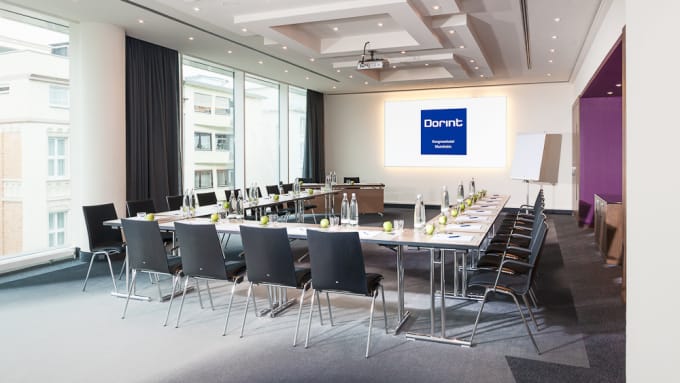




Wednesday, 10.03.2027
10:00 am - 6:00 pm
Thursday, 11.03.2027
09:00 am - 5:00 pm
Friday, 12.03.2027
08:00 am - 4:00 pm
- one joint lunch per full seminar day,
- Catering during breaks and
- extensive working documents.
Wednesday, 31.03.2027
09:00 am - 5:00 pm
Thursday, April 1, 2027
09:00 am - 5:00 pm
Friday, April 2, 2027
09:00 am - 5:00 pm






Monday, May 3, 2027
10:00 am - 6:00 pm
Tuesday, May 4, 2027
09:00 am - 5:00 pm
Wednesday, May 5, 2027
08:00 am - 4:00 pm
- one joint lunch per full seminar day,
- Catering during breaks and
- extensive working documents.







Monday, May 24, 2027
10:00 am - 6:00 pm
Tuesday, May 25, 2027
09:00 am - 5:00 pm
Wednesday, May 26, 2027
08:00 am - 4:00 pm
- one joint lunch per full seminar day,
- Catering during breaks and
- extensive working documents.


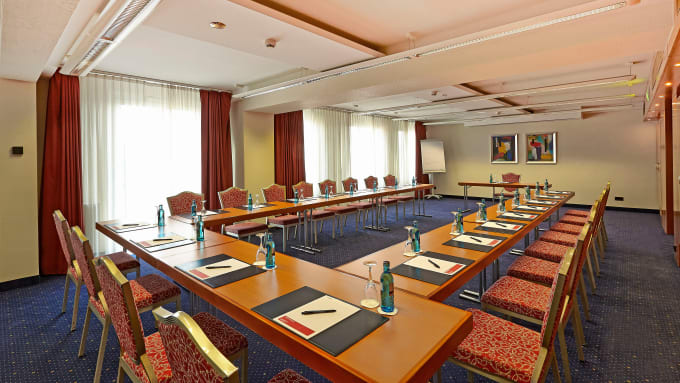




Wednesday, June 9, 2027
10:00 am - 6:00 pm
Thursday, June 10, 2027
09:00 am - 5:00 pm
Friday, June 11, 2027
08:00 am - 4:00 pm
- one joint lunch per full seminar day,
- Catering during breaks and
- extensive working documents.


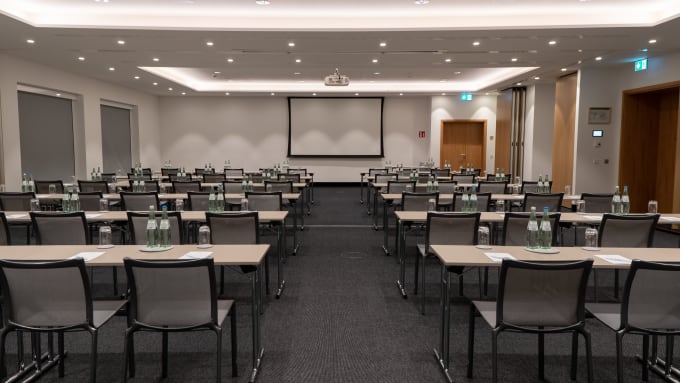




Monday, July 19, 2027
10:00 am - 6:00 pm
Tuesday, July 20, 2027
09:00 am - 5:00 pm
Wednesday, July 21, 2027
08:00 am - 4:00 pm
- one joint lunch per full seminar day,
- Catering during breaks and
- extensive working documents.







Monday, August 30, 2027
10:00 am - 6:00 pm
Tuesday, August 31, 2027
09:00 am - 5:00 pm
Wednesday, September 1, 2027
08:00 am - 4:00 pm
- one joint lunch per full seminar day,
- Catering during breaks and
- extensive working documents.
Monday, September 20, 2027
09:00 am - 5:00 pm
Tuesday, September 21, 2027
09:00 am - 5:00 pm
Wednesday, September 22, 2027
09:00 am - 5:00 pm
Training is guaranteed to take placeThe next booking ensures this course will take place- one joint lunch per full seminar day,
- Catering during breaks and
- extensive working documents.
You might also be interested in:
About us - The Haufe Akademie
Your optimizer, innovator and companion since 1978 -
Your professional partner for professional development and seminars, training courses and topical conferences.
Whether on site, live online or in-house - our customised solutions, our claim to the highest level of consulting expertise and training tailored to your needs simplify the acquisition of skills for the working world of the future and sustainably facilitate professional development.
A wide range of seminars, individual coaching and our flexible formats support HR managers and decision-makers in shaping the future and developing employees, in-house teams and companies.
Experience the benefits of online training from the comfort of your own home. Our online formats meet the highest quality standards and are in no way inferior to face-to-face events in terms of practical relevance. Learn together live online in interactive groups or digitally at a time of your choice.
Do you have any questions?
We are there for you Monday to Friday 8:00 a.m. - 5:00 p.m.

Questions & Answers
In our Questions & Answers (FAQ) section, you will find all the answers and the most frequently asked questions about your selected topic.

Munzinger Str. 9
79111 Freiburg

- Planning security
- Free seminar places
- Quality standards
- Planning and locations
- Funding opportunities
- Training app
- Business Solutions


