Ready to Go as a Virtual Assistant

Role Model & Business Model VA
- What does a virtual assistant do these days? Typical tasks, models (generalist vs. specialist, full-time vs. part-time).
- Distinction from traditional assistant roles, freelance work, and other online professions.
- Self-Assessment: Is This Model Right for Me?
Our Strengths & Service Portfolio
- An assessment of strengths based on one's work experience and professional background.
- What problems do I solve for my customers?
- Development of an initial service portfolio, including the use of AI for drafting (service descriptions, value propositions).
Prospective Customers & Initial Customer Acquisition
- Target Customer Profile: Industry, Company Size, Needs.
- Where can I find these customers? (Events, networks, social media, recommendations).
- Mini Social Media Strategy: Choose the Right Platform, Develop Initial Content Ideas with AI
Fundamentals of Starting a Business & Business Plan Basics
- Why do I want to start my own business? Personal goals and circumstances.
- "Light" business plan: market and competitive overview, portfolio, target customers, rough price estimate.
- Next Steps in the Startup Process (Checklist & Roadmap).
Core Competencies in Assisting as a Key to Success
- Self-organization and simple project management for the first VA-customers.
- Office and AI tools that provide immediate relief (examples from the day-to-day work of an assistant).
- How a professional approach and reliability help set us apart in the VA market.
In your online learning environment, you will find useful information, downloads and extra services for this training course once you have registered.
The participants
- have a clear understanding of what a “virtual assistant” does and know whether and how this model fits their life situation (full-time/part-time).
- define an initial, personalized service portfolio based on their strengths and typical customer needs.
- Develop an ideal customer profile and identify 2–3 suitable ways to find initial customers (e.g., networks, social media, referrals).
- lay the groundwork for their business plan (a simple canvas covering the market, offering, target customers, pricing strategy, and next steps).
- Use AI strategically as a sparring partner to draft service descriptions, “About Me” texts, and initial content ideas.
- They leave the session with a specific to-do list for the next 4 weeks—including clarity on which topics they can explore in greater depth.
With the help of AI tools, hands-on exercises, and brief presentations, participants develop specific text modules and make decisions they can apply directly to one-pagers, websites, or social media. Best practices drawn from our trainer’s many years of experience in the VA field provide valuable support and inspiration.
For anyone who wants to work as a virtual assistant—whether as a side job or a full-time career—and would like to take their first steps on this path under the guidance of an experienced virtual assistant and benefit from her many years of expertise.
- Customized training courses
- Direct application in practice
- Efficient use of time and resources
Start dates and details

Tuesday, 16.02.2027
09:00 am - 5:00 pm
About us - The Haufe Akademie
Your optimizer, innovator and companion since 1978 -
Your professional partner for professional development and seminars, training courses and topical conferences.
Whether on site, live online or in-house - our customised solutions, our claim to the highest level of consulting expertise and training tailored to your needs simplify the acquisition of skills for the working world of the future and sustainably facilitate professional development.
A wide range of seminars, individual coaching and our flexible formats support HR managers and decision-makers in shaping the future and developing employees, in-house teams and companies.
Experience the benefits of online training from the comfort of your own home. Our online formats meet the highest quality standards and are in no way inferior to face-to-face events in terms of practical relevance. Learn together live online in interactive groups or digitally at a time of your choice.
Do you have any questions?
We are there for you Monday to Friday 8:00 a.m. - 5:00 p.m.

Questions & Answers
In our Questions & Answers (FAQ) section, you will find all the answers and the most frequently asked questions about your selected topic.

Munzinger Str. 9
79111 Freiburg


- Planning security
- Free seminar places
- Quality standards
- Planning and locations
- Funding opportunities
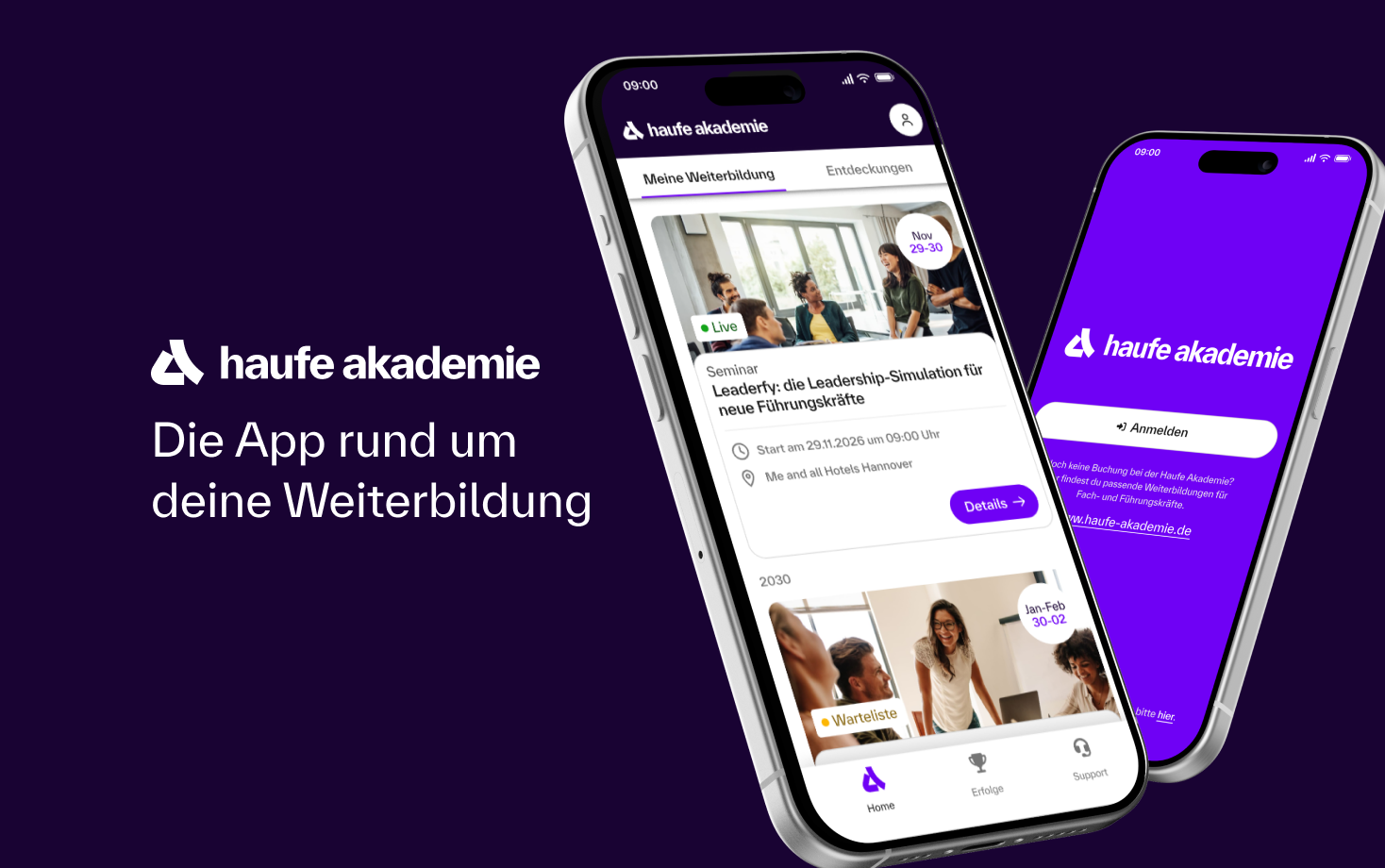
- Training app
- Business Solutions


