Agile working: Developing self-organized teams
Self-motivation & efficiency through meaningful collaboration
 4.6
4.6
Contents
Agility – What's behind it?
- Agile Manifesto – Values and Principles
- Agility: Changing requirements and real visions.
- Line organization and self-organized organization - differences, possibilities.
- The desire for meaningful collaboration.
Self-organized teams in practice—what might that look like?
- 4 team types compared: the authority matrix provides clarity!
- 10 principles for self-organized teams.
- Topics of self-organized teams.
- Agile tools and methods.
- Processes, structures and practices of self-management explained using the example of Scrum.
- Complementary agile approaches to work organization and problem solving: Kanban and Design Thinking.
Responsibility and decision-making in self-organized teams
- Why clarifying responsibility is important.
- Defined roles: Clear areas of responsibility and tasks, promote decision-making authority in the team.
- Methods for analysis and decision making.
Trust and transparency in the team: how do you create a good culture of cooperation?
- Psychological safety as a basis—dealing with mistakes constructively
and learning from them: 8 success factors. - Aim and benefits of feedback - specific methods.
- Goal and benefits of the retrospective - concrete methods.
- Process steps of conflict resolution.
How can self-organized teams be implemented successfully?
- Necessary requirements and conditions.
- Changing an existing way of working and corporate culture - the new role of the manager.
- Accepting challenges and actively shaping them.
- Reflecting on the status quo and creating something new - finding ideas and transferring them into practice.
Learning environment
In your online learning environment, you will find useful information, downloads and extra services for this training course once you have registered.
Your benefit
- You know the success factors of self-organized teams and reflect on your own status quo.
- You will receive suggestions and inspiration for meaningful forms of collaboration.
- You will gain insight into the principles and practices of self-organized teams.
- You will expand your repertoire with agile methods, tools, and techniques and learn how to use and apply them appropriately in collaboration.
- You will learn about tools for constructively designing communication and work processes and will be able to apply them in your team.
- You discuss obstacles to cooperation in self-organized teams and develop concrete possible solutions.
Methods
trainer, discussion of best practice examples, application-oriented exercises in individual and group work, reflection, discussion & exchange of experiences, practical transfer.
Participants are expressly encouraged to contribute their own ideas and examples and these will be included in the training.
Recommended for
Managers, project leaders and employees who work in self-organized teams or would like to implement such teams and want to support or help shape productive, fulfilling and meaningful collaboration.

- Customized training courses
- Direct application in practice
- Efficient use of time and resources
Further recommendations for "Agile working: Developing self-organized teams"
Ratings and feedback from our participants

Start dates and details


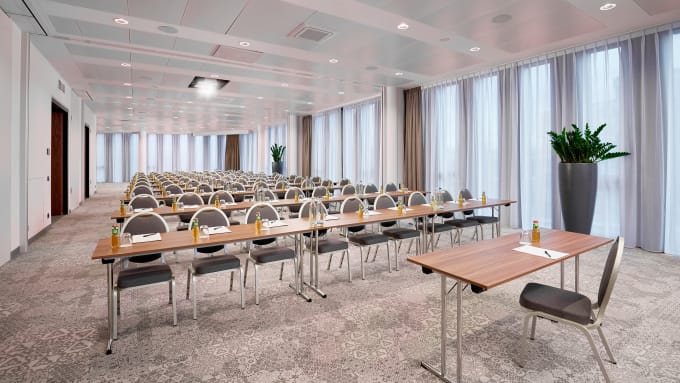





Tuesday, 20.10.2026
10:00 am - 6:00 pm
Wednesday, 21.10.2026
09:00 am - 4:00 pm
- one joint lunch per full seminar day,
- Catering during breaks and
- extensive working documents.
- one joint lunch per full seminar day,
- Catering during breaks and
- extensive working documents.
- one joint lunch per full seminar day,
- Catering during breaks and
- extensive working documents.
You might also be interested in:
Questions about the seminar content
You’ll gain a clearer sense of direction and a stronger sense of commitment when tasks, roles, and decision-making authority are clearly defined within the team. That’s why, in this training, you’ll learn why clarifying responsibilities is a central foundation of self-organized collaboration. You’ll explore roles, areas of responsibility, and decision-making authority, and you’ll learn methods that teams can use to make responsibilities transparent and binding. This creates greater clarity without requiring a manager to dictate every decision.
You can help your team make faster and more sound decisions by consciously using the right decision-making processes. During the seminar, you’ll gain insight into methods for analysis and decision-making that help teams structure discussions and document results in a binding manner. This will enable you to ensure that participation remains possible in your day-to-day work without sacrificing productivity or clarity.
You can improve collaboration more effectively if you don’t view agile methods in isolation, but rather connect them to team culture, accountability, and communication. That’s why this training will introduce you to training tools and methods—such as Scrum, Kanban, and Design Thinking—in the appropriate context. This will help you better assess which tool is best suited for which challenge and how to use it effectively within your team.
You build trust within the team when communication becomes more transparent, mistakes are used as learning opportunities, and everyone involved feels confident contributing. During the workshop, you’ll explore how to build a strong culture of collaboration and identify the key factors that contribute to its success. You’ll learn how feedback, retrospectives, and open reflection help team members take ownership and grow together.
You’ll help your team function more effectively again by addressing conflicts in a structured way rather than sweeping them under the rug. During training , you’ll learn training involved in conflict resolution and reflect on typical obstacles to collaboration. This will help you identify tensions early on, conduct conversations more constructively, and develop solutions that strengthen trust and productivity within the team.
About us - The Haufe Akademie
Your optimizer, innovator and companion since 1978 -
Your professional partner for professional development and seminars, training courses and topical conferences.
Whether on site, live online or in-house - our customised solutions, our claim to the highest level of consulting expertise and training tailored to your needs simplify the acquisition of skills for the working world of the future and sustainably facilitate professional development.
A wide range of seminars, individual coaching and our flexible formats support HR managers and decision-makers in shaping the future and developing employees, in-house teams and companies.
Experience the benefits of online training from the comfort of your own home. Our online formats meet the highest quality standards and are in no way inferior to face-to-face events in terms of practical relevance. Learn together live online in interactive groups or digitally at a time of your choice.
Do you have any questions?
We are there for you Monday to Friday 8:00 a.m. - 5:00 p.m.

Questions & Answers
In our Questions & Answers (FAQ) section, you will find all the answers and the most frequently asked questions about your selected topic.

Munzinger Str. 9
79111 Freiburg

- Planning security
- Free seminar places
- Quality standards
- Planning and locations
- Funding opportunities
- Training app
- Business Solutions


