Open Badges
Add your digital badge to career networks and show what you can do.

Collaboration and communication
Understanding Communication and Making Concrete Improvements
Understanding and leveraging differences in perception
In the “Communication Lab” we examine our own situations
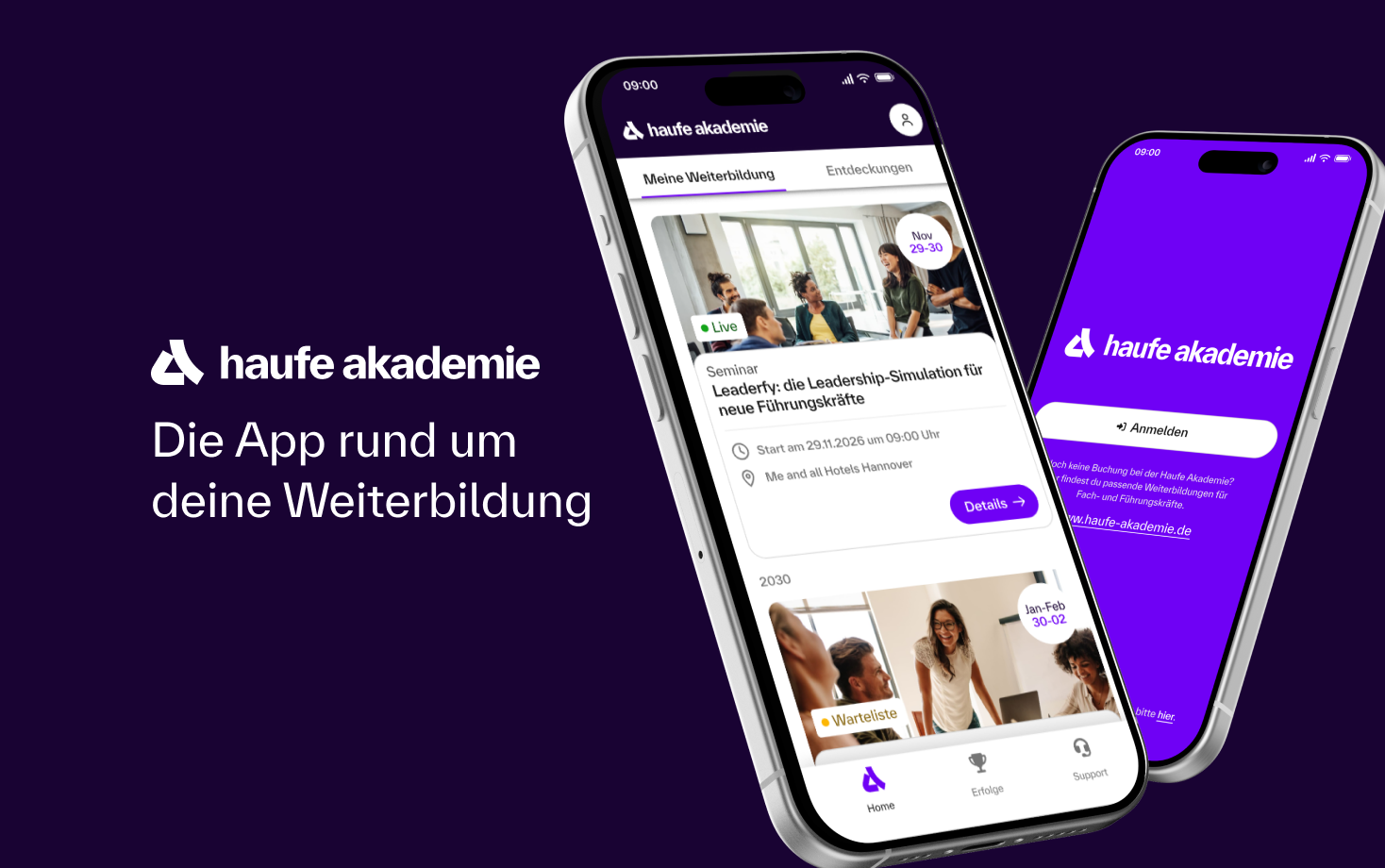
In your online learning environment, you will find useful information, downloads and extra services for this training course once you have registered.
trainer, group and individual work, and intensive practice sessions. Training that allows you to bring your own situations into the session. In the “Communication Lab,” we examine these situations step by step: analyzing your own behavior, providing clear feedback on the impact you make, and offering specific tips on how and what you can do differently during the training.
Professionals and managers who want to make their communication clearer, more efficient, and more personable.
In challenging conversational situations, it’s often not enough to focus solely on the factual level. Visible behavior frequently masks underlying feelings, needs, or unspoken concerns. If you ignore this level, a conversation can quickly become more tense, defensive, or evasive. That’s exactly why this training course helps you understand communication in a more nuanced way using practical models. You’ll learn not to judge behavior too quickly, but to be more mindful of what’s really happening in the conversation. This way, even in challenging moments, you can stay clear-headed, show humanity, and still work collaboratively toward a solution.
There are many potential sources of interference between what you want to say and what the other person actually hears. Tone of voice, word choice, prior knowledge, personal expectations, and current mood all influence how a statement is understood. This is particularly relevant for specialists and managers, as their statements often impact decisions, collaboration, and motivation. In this training course, you’ll analyze why communication doesn’t always achieve the desired effect. Through feedback on your own impact, you’ll recognize the signals you’re sending and how they might be interpreted. This will make your communication more deliberate, clearer, and more effective.
Long coordination loops often arise when tasks, responsibilities, or next steps aren’t clearly defined. At the same time, asking too many follow-up questions can quickly come across as controlling. Through this training how to structure conversations, summarize results clearly, and articulate expectations. This way, you’ll provide more guidance rather than adding pressure. You’ll learn to communicate in a firm yet respectful manner. This will help you resolve issues more quickly without straining relationships.
In everyday work life, clarity and humanity are often mistakenly seen as opposites. Some people avoid making clear statements so as not to hurt anyone’s feelings. Others become very direct and, in doing so, lose sight of the importance of building relationships. This training program helps you combine both approaches. You’ll learn to tailor your statements to the situation, ask targeted questions, and summarize the conversation in a way that builds rapport. At the same time, you’ll develop a better sense of how your words come across to others. This will allow you to provide guidance without coming across as harsh and to show appreciation without being vague.
Your communication style directly influences whether others feel understood, ignored, motivated, or unsettled. Professionals and managers, in particular, communicate with a wide variety of people, such as team members, cross-functional colleagues, supervisors, or external partners. A style that works well with one person may cause irritation in another. Through this training about different communication styles and reflect on the impact you have. This will enable you to adapt your conversations more consciously to your conversation partner without having to pretend to be someone else. This improves collaboration because you’ll communicate more flexibly, clearly, and effectively.

Wednesday, 18.11.2026
09:00 am - 5:30 pm
Thursday, 19.11.2026
09:00 am - 5:00 pm
Tuesday, 02.03.2027
09:00 am - 5:30 pm
Wednesday, 03.03.2027
09:00 am - 5:00 pm
Monday, June 21, 2027
09:00 am - 5:30 pm
Tuesday, June 22, 2027
09:00 am - 5:00 pm
Tuesday, September 21, 2027
09:00 am - 5:30 pm
Wednesday, September 22, 2027
09:00 am - 5:00 pm
Training is guaranteed to take placeYour optimizer, innovator and companion since 1978 -
Your professional partner for professional development and seminars, training courses and topical conferences.
Whether on site, live online or in-house - our customised solutions, our claim to the highest level of consulting expertise and training tailored to your needs simplify the acquisition of skills for the working world of the future and sustainably facilitate professional development.
A wide range of seminars, individual coaching and our flexible formats support HR managers and decision-makers in shaping the future and developing employees, in-house teams and companies.
Experience the benefits of online training from the comfort of your own home. Our online formats meet the highest quality standards and are in no way inferior to face-to-face events in terms of practical relevance. Learn together live online in interactive groups or digitally at a time of your choice.
We are there for you Monday to Friday 8:00 a.m. - 5:00 p.m.
In our Questions & Answers (FAQ) section, you will find all the answers and the most frequently asked questions about your selected topic.