4.4
Open Badges
Add your digital badge to career networks and show what you can do.

Basics of project management
Project start
Project planning
Project management
Project completion
Application of project management tools with transfer to own projects.
In your online learning environment, you will find useful information, downloads and extra services for this training course once you have registered.
You will learn the important basics of project management and how to apply the project management tools pragmatically and successfully.
You train like you:
Please bring your own marketing and product management-specific problems (including specific questions). We will work together to develop best practice models and apply the tools taught.
Input sequences from the trainer, exercises based on practical project examples from the attendees, moderated exchange of experiences, discussion of case studies. Our:e experienced:e trainer conveys clearly and pragmatically how attendees ' complex projects can be carried out even more successfully with the help of suitable project management methods.
Specialists and managers from the fields of marketing, communication, product management, event management, project managers and decision makers who will be entrusted with the task of managing projects in the future or who are already involved in projects.


Monday, 26.10.2026
09:00 am - 5:30 pm
Tuesday, 27.10.2026
09:00 am - 4:30 pm
Monday, 16.11.2026
09:00 am - 5:30 pm
Tuesday, 17.11.2026
09:00 am - 4:30 pm
Thursday, 10.12.2026
09:00 am - 5:30 pm
Friday, 11.12.2026
09:00 am - 4:30 pm
Monday, 25.01.2027
09:00 am - 5:30 pm
Tuesday, 26.01.2027
09:00 am - 4:30 pm
Tuesday, 23.02.2027
09:00 am - 5:30 pm
Wednesday, 24.02.2027
09:00 am - 4:30 pm
Monday, 15.03.2027
09:00 am - 5:30 pm
Tuesday, 16.03.2027
09:00 am - 4:30 pm
Thursday, April 15, 2027
09:00 am - 5:30 pm
Friday, April 16, 2027
09:00 am - 4:30 pm
Tuesday, 27.04.2027
09:00 am - 5:30 pm
Wednesday, April 28, 2027
09:00 am - 4:30 pm
Tuesday, June 1, 2027
09:00 am - 5:30 pm
Wednesday, June 2, 2027
09:00 am - 4:30 pm
Thursday, July 1, 2027
09:00 am - 5:30 pm
Friday, July 2, 2027
09:00 am - 4:30 pm
Tuesday, September 28, 2027
09:00 am - 5:30 pm
Wednesday, September 29, 2027
09:00 am - 4:30 pm
Tuesday, October 5, 2027
09:00 am - 5:30 pm
Wednesday, October 6, 2027
09:00 am - 4:30 pm
Training is guaranteed to take placeYou’ll learn project management as it’s applied in marketing, communications, and product management: defining project scope, conceptualization, planning, execution, and closure—using both traditional tools and agile methods. General project management training courses are often geared toward IT or construction projects. Here, the focus is on campaigns, product launches, and product projects.
You'll bring your own projects and work on them at the " training." By the end of the two days, you'll walk away with a revised plan for an ongoing project.
Yes. With experience, you usually develop your own style, but you also have gaps in your knowledge that you no longer notice yourself. The “ training ” course organizes your knowledge and covers project scope definition, agile methods, and management tools. You bring your own problems to the course and work on them directly.
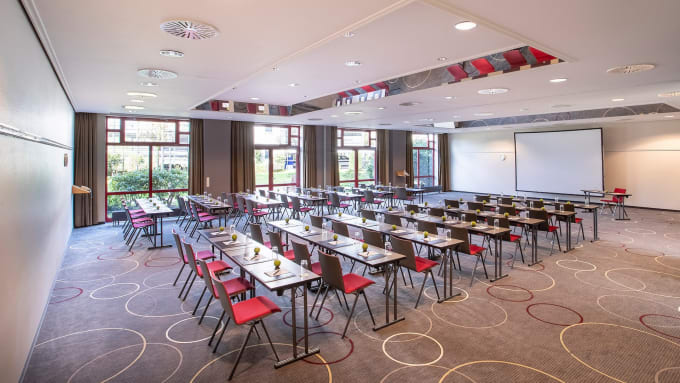
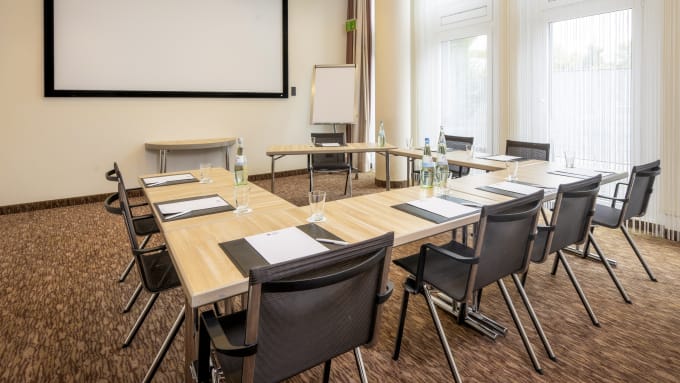
The " training " lasts two days. It takes place in person or live online via Zoom. The fee includes course materials, lunch, and snacks during breaks for in-person sessions. You can find the current dates, locations, and prices on the seminar page.
You can add a two-hour transfer coaching session with your trainer at a discounted rate when you book it at the same time. The “ training ” is also a module in three courses: “New to Product Management: The Compact Course” (30782), “ certified Event Manager Continuing Education” (30785), and “Basic Course in Project Management for project employees” (30377). If you’d like a certificate, it’s best to book it through one of these courses. For companies, the “ training ” is available as an in-house training program. Upon completion, you’ll receive an Open Badge.
Before you begin, clarify the following in writing with the client: the objective and success criteria, the scope of the project and what is explicitly excluded, the budget, deadlines, stakeholders, and decision-making processes. Then draft a re-brief—that is, a summary in your own words—and have it confirmed. This way, any misunderstandings will be identified before any work is done.
In the " training ," you'll use this information to develop a project profile that you can use as a template for future projects.
At the start of the project, work with the team to identify all possible risks, such as missing approvals, dependencies on agencies, or resource constraints. Assess each risk based on its likelihood of occurrence and impact, and define countermeasures and assign responsibility for the most significant risks. It’s important to briefly review the list at every status meeting.
In the " training ," you'll develop a risk analysis for one of your projects and also explore the opportunities you can take advantage of.
List all stakeholders and assess how much influence they have and what their stance is on the project. From this, you can determine who to involve closely, who to keep regularly informed, and who you still need to convince. When faced with resistance, it helps to ask about the underlying interests behind a “ position ” rather than just negotiating the “ position .”
In the " training ," you'll analyze the stakeholders of your own project and discuss challenging cases with the group.
First, break the project down into work packages (structure plan). Then organize them into a sequence with dependencies (network diagram) and identify the critical path—that is, the chain of tasks that determines the completion date. Allow for lead times for approvals, printing, or agency work, and set milestones. When requirements are uncertain, an agile approach using Scrum is often the better choice.
In the " training ," you'll plan your own project using these tools and determine when a traditional approach is better suited and when an agile approach is better suited.
The Magic Triangle describes the relationship between time, cost, and quality (or scope). If one of these factors changes, the others must adjust accordingly. If a client wants more work done in less time, you can use this to objectively show what options are available: a larger budget, a reduced scope, or a later deadline.
In the " training ," you'll practice exactly these kinds of conversations and learn how to properly document changes to the project.
Regularly compare planned versus actual progress on deadlines, budget, and results. A brief status report with a traffic-light system shows everyone at a glance where the issues lie. Scheduled reviews and clear escalation procedures ensure that problems are brought to light early on. Document any deviations and decide together with the client how to proceed.
In the " training ," you'll learn about these tools and discuss common pitfalls in marketing and PM projects with the group.
Without a proper wrap-up, there is no formal acceptance, no clear end to responsibilities, and no insights for the next project. A good wrap-up includes a handover, acceptance, evaluation of results and collaboration, a log, and lessons learned. This often takes only an hour and saves much more time on the next project.
At the " training ," you'll walk through these steps once and take home a checklist for your projects.
Your optimizer, innovator and companion since 1978 -
Your professional partner for professional development and seminars, training courses and topical conferences.
Whether on site, live online or in-house - our customised solutions, our claim to the highest level of consulting expertise and training tailored to your needs simplify the acquisition of skills for the working world of the future and sustainably facilitate professional development.
A wide range of seminars, individual coaching and our flexible formats support HR managers and decision-makers in shaping the future and developing employees, in-house teams and companies.
Experience the benefits of online training from the comfort of your own home. Our online formats meet the highest quality standards and are in no way inferior to face-to-face events in terms of practical relevance. Learn together live online in interactive groups or digitally at a time of your choice.
We are there for you Monday to Friday 8:00 a.m. - 5:00 p.m.
In our Questions & Answers (FAQ) section, you will find all the answers and the most frequently asked questions about your selected topic.