4.6
4.6
Open Badges
Add your digital badge to career networks and show what you can do.

Fundamentals of negotiation
How to prepare for negotiations
Negotiation process
Communication techniques
Closing the deal
Developing and maintaining a level of trust between the negotiating parties
Once you have registered, you will be able to access your online learning platform, including extra materials for consolidating what you have learned.
You will
Trainer input, individual and group work, simulation with video feedback, discussion, case-studies and analysis of critical incidents. This course aims at mastering negotiations in English.
Anyone who is fairly new to the topic of negotiation and needs to conduct discussions on an international level. Employees with some negotiation experience who now wish to apply their skills in a cross-cultural context.
Speaking the same language does not automatically prevent misunderstandings. Negotiation partners may interpret the same statement differently because they have different expectations regarding politeness, commitment, pace, or decision making. The training helps you recognise these culturally influenced differences at an early stage and assess your counterpart’s behaviour more accurately. You explore direct and indirect communication styles, as well as different approaches to trust and cooperation. Using realistic business situations, you practise addressing uncertainty and misunderstandings without placing unnecessary strain on the professional relationship. This enables you to bring the discussion back to shared objectives and prevents cultural differences from obstructing the entire negotiation process.
Effective preparation involves more than reviewing facts, prices, and contractual terms. It is equally important to consider your counterpart’s cultural expectations, decision making processes, and communication habits. The training provides practical planning tools that help you define your objectives, priorities, limits, and possible concessions. Cultural frameworks support you in assessing your negotiation partners more effectively without placing individuals into rigid categories. You also learn how digital information sources and AI tools can support more efficient preparation. As a result, you enter the negotiation with a clear strategy, anticipate possible reactions more accurately, and respond more confidently to unexpected developments.
Some negotiation partners prefer to focus immediately on figures, services, and contractual conditions. Others expect personal conversation and relationship building before they are willing to discuss specific agreements. The training shows you how task focused and relationship focused approaches differ. You learn to identify relevant signals in the conversation, your counterpart’s behaviour, and the overall structure of the meeting. This helps you decide when detailed factual arguments are appropriate and when it is more effective to invest additional time in building trust. You develop a more flexible approach without having to change your personality. This makes it easier to establish productive relationships with different business partners and prevents you from overlooking an important opportunity to build trust or placing your counterpart under pressure by moving into detailed negotiations too quickly.
Not all negotiation partners share the same expectations regarding punctuality, deadlines, responsibilities, and decision making authority. In some organisations, the people at the negotiating table can make extensive decisions. In others, several levels of management or internal stakeholder groups must be involved. Attitudes towards time and scheduling can also differ considerably. The training helps you take these factors into account when planning and conducting negotiations. You learn to ask targeted questions about decision making processes and develop realistic expectations regarding the overall timeline. This prevents you from interpreting delayed decisions as a lack of interest or creating unnecessary pressure through unrealistic deadlines. You also recognise more quickly who has genuine influence over the final outcome and how the next steps should be organised.
Eye contact, gestures, facial expressions, silence, and physical distance can have different meanings depending on the cultural context. It is therefore risky to interpret individual signals solely according to your own habits and expectations. The training explores the impact of body language and shows you how to assess nonverbal communication within the wider context of the conversation. You practise separating objective observations from immediate assumptions. Instead of automatically interpreting silence as rejection, for example, you learn to clarify whether your counterpart is reflecting, needs to consult colleagues, or genuinely has reservations. This more balanced approach helps you respond with greater confidence. At the same time, you become more aware of your own body language and learn how to manage your impact more deliberately in international business situations.



Wednesday, 09.12.2026
9:00 am - 5:00 pm
Thursday, 10.12.2026
8:30 am - 4:30 pm
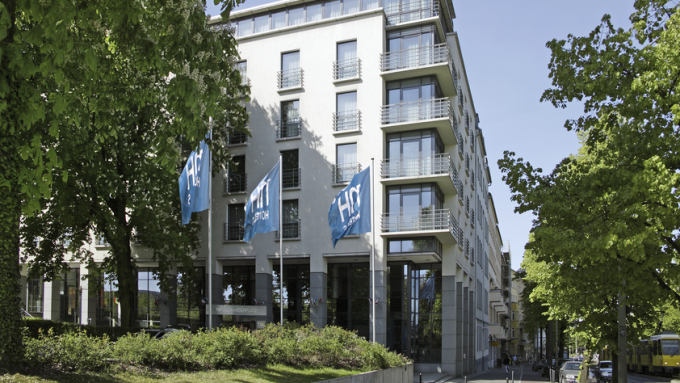
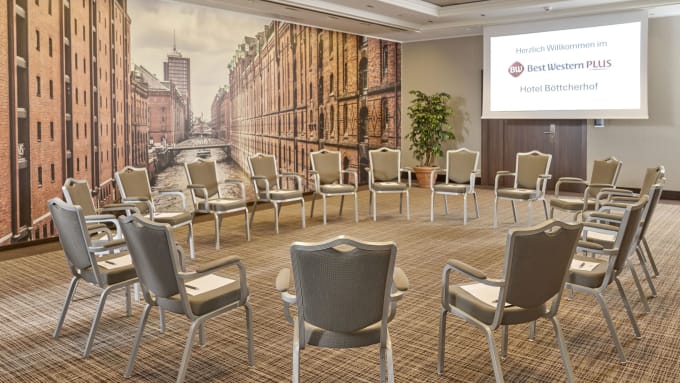
The stated participation fee includes a group lunch per full seminar day, refreshments during breaks and extensive course handouts. The participant must settle accommodation costs directly with the hotel. Regarding the booking of the hotel, you will find a reservation form in your online learning platform.
Tuesday, 09.02.2027
9:00 am - 5:00 pm
Wednesday, 10.02.2027
8:30 am - 4:30 pm
The stated participation fee includes a group lunch per full seminar day, refreshments during breaks and extensive course handouts. The participant must settle accommodation costs directly with the hotel. Regarding the booking of the hotel, you will find a reservation form in your online learning platform.
Thursday, 29.04.2027
9:00 am - 5:00 pm
Friday, 30.04.2027
8:30 am - 4:30 pm
The stated participation fee includes a group lunch per full seminar day, refreshments during breaks and extensive course handouts. The participant must settle accommodation costs directly with the hotel. Regarding the booking of the hotel, you will find a reservation form in your online learning platform.
Thursday, 17.06.2027
9:00 am - 5:00 pm
Friday, 18.06.2027
8:30 am - 4:30 pm
The stated participation fee includes a group lunch per full seminar day, refreshments during breaks and extensive course handouts. The participant must settle accommodation costs directly with the hotel. Regarding the booking of the hotel, you will find a reservation form in your online learning platform.
Tuesday, 07.09.2027
9:00 am - 5:00 pm
Wednesday, 08.09.2027
8:30 am - 4:30 pm
The stated participation fee includes a group lunch per full seminar day, refreshments during breaks and extensive course handouts. The participant must settle accommodation costs directly with the hotel. Regarding the booking of the hotel, you will find a reservation form in your online learning platform.
Training is guaranteed to take placeThe stated participation fee includes a group lunch per full seminar day, refreshments during breaks and extensive course handouts. The participant must settle accommodation costs directly with the hotel. Regarding the booking of the hotel, you will find a reservation form in your online learning platform.
The stated participation fee includes a group lunch per full seminar day, refreshments during breaks and extensive course handouts. The participant must settle accommodation costs directly with the hotel. Regarding the booking of the hotel, you will find a reservation form in your online learning platform.
Your optimiser, innovator and companion since 1978 –
Your professional partner for professional development and seminars, training courses and topical conferences.
Whether on site, live online or in-house - our customised solutions, our claim to the highest level of consulting expertise and training tailored to your needs simplify the acquisition of skills for the working world of the future and sustainably facilitate professional development.
A wide range of seminars, individual coaching and our flexible formats support HR managers and decision-makers in shaping the future and developing employees, in-house teams and companies.
Experience the benefits of online training from the comfort of your own home. Our online formats meet the highest quality standards and are in no way inferior to face-to-face events in terms of practical relevance. Learn together live online in interactive groups or digitally at a time of your choice.

We are there for you Monday to Friday 8:00 a.m. - 5:00 p.m.
In our Questions & Answers (FAQ) section, you will find all the answers and the most frequently asked questions about your selected topic.































 Start AI Advisor