 4.5
4.5
Evaluating the evidence correctly - What do application documents reveal?
- What do application documents say about candidates or: What employers should not pay attention to.
The gardener is not always the murderer! - Do not form false hypotheses
- Systematically recognize automatisms of biased personal assessment in selection decisions (e.g. assimilation and expectation effects) and avoid selective hypotheses.
"We just have a few more questions for you!" - Precise questioning technique from validation research
- Why the most frequently asked questions in the job interview do not predict future behavior in the workplace.
- Ask more precisely about cross-job requirements.
- The "incident job technique": How a higher predictive validity can be achieved for a specific job profile with biographical, situational and technical questions.
What should the answers tell us? - Psychometric quality in highly structured interviews
- Better measurement of responses using behaviorally anchored rating scales.
- Simplify the comparability of applicants .
Lie or truth? - Using forensic methods to better assess the credibility of a statement
- The scope and limits of non-verbal lie diagnostics.
- The use of so-called real signs as a method of forensic credibility assessment.
Getting to the bottom of someone carefully and professionally - Handling information
- Application of the "Strategic Use of Evidence Technique" (Granhag/Hartwig) if critical information is available.
In your online learning environment, you will find useful information, downloads and extra services for this training course once you have registered.
- Develop a professional interview guide and thereby improve the selection decision by a factor of eight (!).
- Avoiding errors in the evaluation of application documents.
- Increase diagnostic knowledge and only pay attention to what is really important in the applicant interview.
- Learn how to formulate valid interview questions for a specific job profile.
- Improving the ability to assess credibility.
- Exciting know-how and best-practice examples from a criminologist.
Trainer input, group and individual exercises, best-practice examples, work aids and checklists, discussion, exchange of experience
Recruiters, HR managers, HR managers, executives and all other people who have already gained initial experience in conducting applicant interviews and would like to professionalize their interview technique
Questions about the seminar content
Because professional job interviews directly improve the quality of your hiring decisions. This training you how to prepare for interviews in a more structured way, identify key information more effectively, and make hiring decisions based on a more solid foundation. This is particularly valuable because it helps you reduce hiring mistakes and assess candidates’ fit with the job requirements more accurately.
In training , you training how to apply insights from forensic testimony psychology to professional job interviews. You’ll work with criteria for assessing credibility and learn how to evaluate statements more closely based on their content, structure, and plausibility. This will help you in recruiting to assess interview statements more objectively and be less influenced by appearance, quick wit, or self-confidence.
This training you precise questioning techniques for job interviews that help you avoid superficial answers and systematically elicit information relevant to the hiring decision. You’ll learn to phrase questions in a way that brings out examples of behavior, specific experiences, and reliable statements. As a result, you’ll conduct interviews in a more focused manner and significantly increase the value of your interview results in the recruiting process.
During training , you training your ability to professionally analyze application materials. You’ll learn which information in resumes, cover letters, and other documents is truly relevant for the subsequent job interview, and what common mistakes can arise during the evaluation process. This will improve your interview preparation, as you’ll avoid jumping to conclusions about the materials and instead use them strategically as a basis for tailored questions during the interview.
Not every job interview goes smoothly. In training how to stay in control of the conversation—even when faced with evasive, unclear, or contradictory statements—and steer the discussion toward relevant topics. This is particularly important for professional job interviews because it allows you to manage critical situations more effectively and gather useful information even when the conversation takes a difficult turn.
This training you how to systematically analyze interview responses instead of relying on spontaneous impressions. You will learn to evaluate answers methodically, assess their substance and credibility in a more nuanced way, and draw more informed conclusions for the hiring process based on the content of the conversation. As a result, your analysis during candidate interviews will become more precise, transparent, and significantly more accurate.
- Customized training courses
- Direct application in practice
- Efficient use of time and resources
Ratings and feedback from our participants

Start dates and details


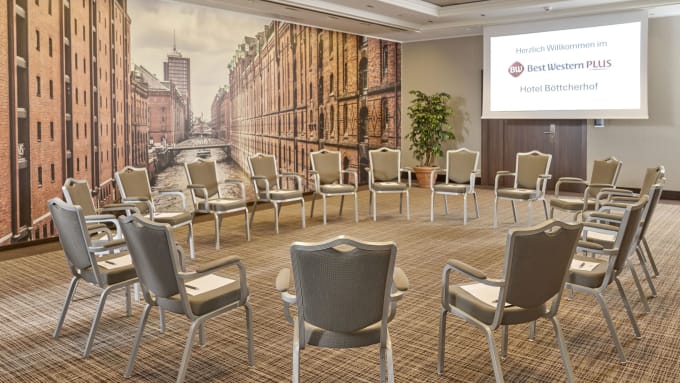





Friday, 30.10.2026
09:00 am - 5:00 pm
- one joint lunch per full seminar day,
- Catering during breaks and
- extensive working documents.


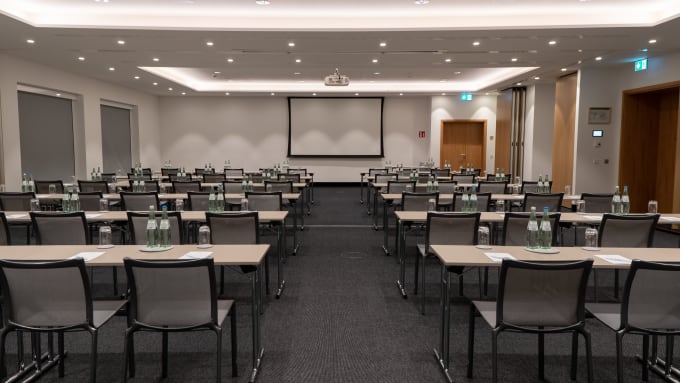




Wednesday, 04.11.2026
09:00 am - 5:00 pm
- one joint lunch per full seminar day,
- Catering during breaks and
- extensive working documents.







Monday, 30.11.2026
09:00 am - 5:00 pm
- one joint lunch per full seminar day,
- Catering during breaks and
- extensive working documents.







Thursday, 11.02.2027
09:00 am - 5:00 pm
- one joint lunch per full seminar day,
- Catering during breaks and
- extensive working documents.



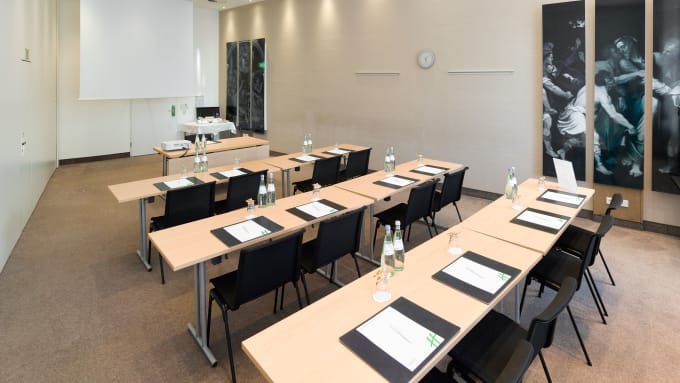



Wednesday, 10.03.2027
09:00 am - 5:00 pm
- one joint lunch per full seminar day,
- Catering during breaks and
- extensive working documents.







Wednesday, April 7, 2027
09:00 am - 5:00 pm
- one joint lunch per full seminar day,
- Catering during breaks and
- extensive working documents.
Wednesday, June 16, 2027
09:00 am - 5:00 pm
- one joint lunch per full seminar day,
- Catering during breaks and
- extensive working documents.







Tuesday, July 6, 2027
09:00 am - 5:00 pm
- one joint lunch per full seminar day,
- Catering during breaks and
- extensive working documents.

Tuesday, September 21, 2027
09:00 am - 5:00 pm
- one joint lunch per full seminar day,
- Catering during breaks and
- extensive working documents.
Training is guaranteed to take place- one joint lunch per full seminar day,
- Catering during breaks and
- extensive working documents.
- one joint lunch per full seminar day,
- Catering during breaks and
- extensive working documents.
About us - The Haufe Akademie
Your optimizer, innovator and companion since 1978 -
Your professional partner for professional development and seminars, training courses and topical conferences.
Whether on site, live online or in-house - our customised solutions, our claim to the highest level of consulting expertise and training tailored to your needs simplify the acquisition of skills for the working world of the future and sustainably facilitate professional development.
A wide range of seminars, individual coaching and our flexible formats support HR managers and decision-makers in shaping the future and developing employees, in-house teams and companies.
Experience the benefits of online training from the comfort of your own home. Our online formats meet the highest quality standards and are in no way inferior to face-to-face events in terms of practical relevance. Learn together live online in interactive groups or digitally at a time of your choice.
Do you have any questions?
We are there for you Monday to Friday 8:00 a.m. - 5:00 p.m.

Questions & Answers
In our Questions & Answers (FAQ) section, you will find all the answers and the most frequently asked questions about your selected topic.

Munzinger Str. 9
79111 Freiburg


- Planning security
- Free seminar places
- Quality standards
- Planning and locations
- Funding opportunities
- Training app
- Business Solutions


