4.9
4.9
Open Badges
Add your digital badge to career networks and show what you can do.
Recognizing and Assessing Conflicts
Addressing and Resolving Personal Conflicts
Moderating conflicts (as a manager)
Feel free to bring up a conflict that's on your mind right now.
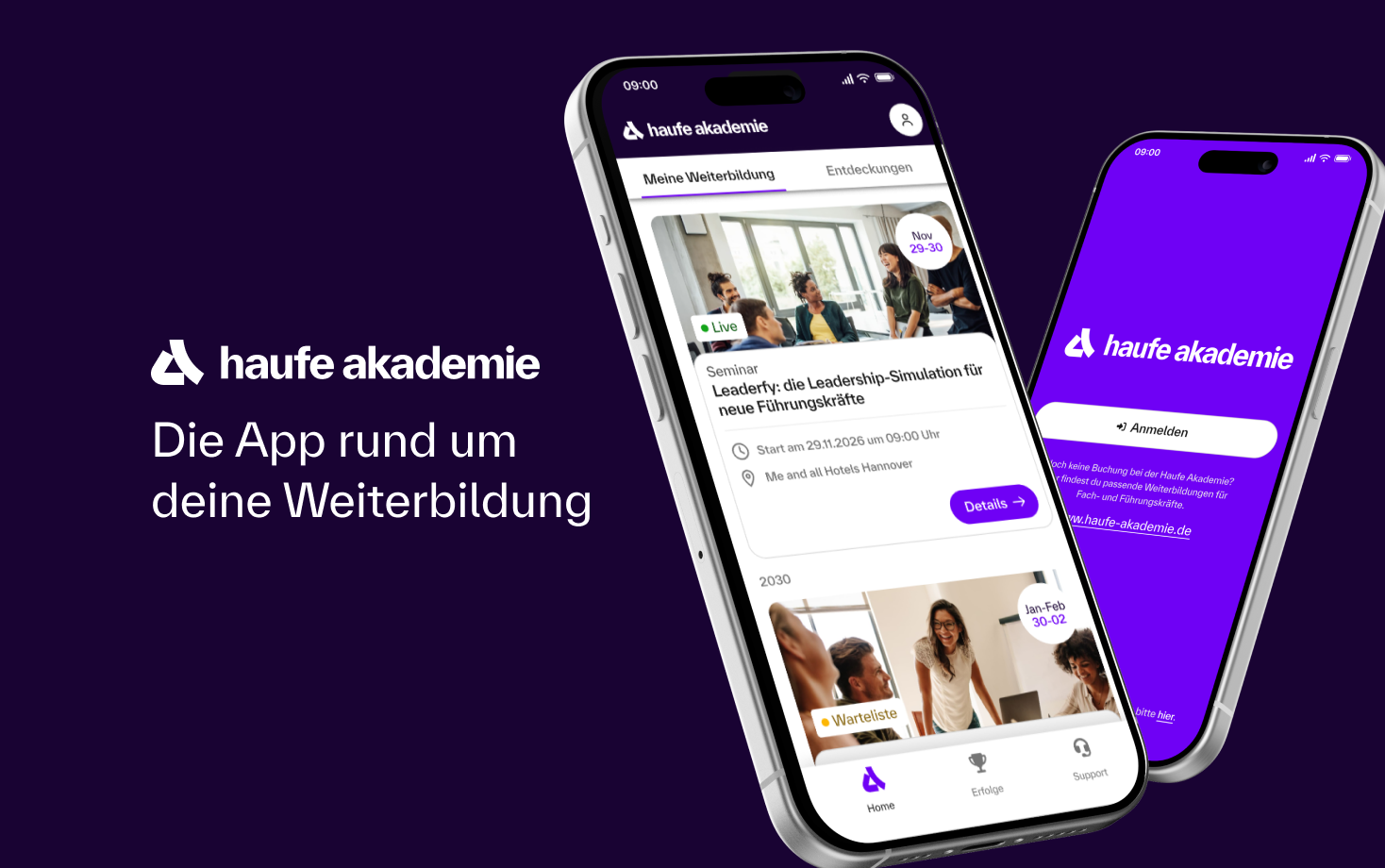
In your online learning environment, you will find useful information, downloads and extra services for this training course once you have registered.
trainer, moderated discussion among participants, interactive exercise sequences, concrete case work (including participants' own cases), feedback, and transfer aids for participants' own practice.
Feel free to bring up a conflict that's on your mind right now.
Specialists and managers and anyone who wants to understand conflicts more easily and deal with them pragmatically in everyday working life.
Recurring conflicts often arise because only the visible situation is addressed, but not the underlying patterns. In this training to recognize conflict dynamics more precisely and understand which triggers, roles, and reactions keep fueling the conflict. This will enable you to prepare for conversations in a more structured way, reflect on your own role, and work with those involved to develop solutions that not only provide short-term relief but also prevent the conflict from recurring.
A conflict discussion requires a clear mindset, thorough preparation, and respectful language. This training you training structural models for conflict discussions and shows you how to clearly address difficult topics without making accusations. Through this, you’ll learn to address tension, identify interests, and invite your counterpart into a constructive conversation rather than triggering defensiveness or escalation.
Strong emotions are normal in conflicts, but they can narrow your focus on solutions. In this training what happens to people in conflicts and which personal “trigger points” influence your reactions. Through reflection, shifting perspectives, and practical methods, you’ll learn to remain more emotionally stable, assess the situation more consciously, and avoid automatically falling back into old reaction patterns.
Not every conflict can be resolved with a simple conversation. The key factors are how far the conflict has already escalated, how entrenched the positions are, and whether the parties involved are still open to dialogue. This training you assess the stages of escalation and choose appropriate resolution strategies. This is particularly important for managers, as it enables them to better judge when they can facilitate the discussion themselves and when it makes sense to bring in an external facilitator.
Conflict resolution does not mean giving in or seeking harmony at any cost. Professionals and leaders, in particular, need the ability to remain clear-headed while communicating respectfully. In this training taking a solution-oriented and professional approach without getting caught up in justifications, blame, or power struggles. This will enable you to provide guidance, take responsibility, and at the same time facilitate a fair resolution.


Monday, 07.12.2026
09:00 am - 5:00 pm
Tuesday, 08.12.2026
09:00 am - 5:00 pm
Wednesday, 24.02.2027
09:00 am - 5:00 pm
Thursday, 25.02.2027
09:00 am - 5:00 pm
Thursday, June 17, 2027
09:00 am - 5:00 pm
Friday, June 18, 2027
09:00 am - 5:00 pm
Monday, September 13, 2027
09:00 am - 5:00 pm
Tuesday, September 14, 2027
09:00 am - 5:00 pm
Your optimizer, innovator and companion since 1978 -
Your professional partner for professional development and seminars, training courses and topical conferences.
Whether on site, live online or in-house - our customised solutions, our claim to the highest level of consulting expertise and training tailored to your needs simplify the acquisition of skills for the working world of the future and sustainably facilitate professional development.
A wide range of seminars, individual coaching and our flexible formats support HR managers and decision-makers in shaping the future and developing employees, in-house teams and companies.
Experience the benefits of online training from the comfort of your own home. Our online formats meet the highest quality standards and are in no way inferior to face-to-face events in terms of practical relevance. Learn together live online in interactive groups or digitally at a time of your choice.
We are there for you Monday to Friday 8:00 a.m. - 5:00 p.m.
In our Questions & Answers (FAQ) section, you will find all the answers and the most frequently asked questions about your selected topic.