AI prompting in requirements engineering and business analysis
Precisely control texts, requirements & processes with smart AI usage
 4.3
4.3
Understanding the basics & using AI in a targeted manner
- Understand the functionality and application areas of generative AI models.
- Formulate and systematically develop targeted prompts.
- Megaprompts for complex tasks - reusable and customizable.
- Model thought processes using AI and adapt them to different contexts.
Practical application: From the idea to implementation
- Develop custom GPTs for your tasks - without any programming knowledge.
- Transform text structures efficiently: E.g. from the tender to the offer, from the offer to the specifications.
- Developing complete product concepts from ideas.
Analyze & secure requirements
- Check user stories against defined key results.
- Use business analysis and project management tools in a targeted manner with AI.
- Check requirements documents for completeness, clarity and added value.
- Validate and apply acceptance and acceptance criteria with AI support.
- Evaluate change requests for their actual business value - data-based and comprehensible.
- Use the EU AI Act or ISO, norms and other regulations and standards to check user stories or work packages.
Observe safety & standards
- Use AI in a targeted manner to identify and document risks in accordance with the EU AI Act.
- Create templates according to DIN, ISO and other standards with AI support, e.g. for audits or audit reports.
Your digital add-on: In addition to the training, you’ll receive free access afterward to a guide on how to use AI as your personal learning transfer companion or coach to successfully apply what you’ve learned to your daily work.
In your online learning environment, you will find useful information, downloads and extra services for this training course once you have registered.
You will learn the best questioning techniques for quick, targeted answers. Create better, structured content from the complex information available to you, which will help you in requirements engineering and make your everyday life easier.
- You'll learn how to write and develop targeted prompts.
- You will be able to develop and reuse megaprompts for complex tasks.
- You will design and document workflows with AI that are suitable for everyday use.
- You will learn more about the EU AI Act, spellings and templates for DIN, ISO and other standards.
Interactive impulses, live demonstrations, working with templates and megaprompts, group exercises, use case work, feedback and coaching elements.
Requirements engineers (requirements managers), process managers, project managers, product owners, business analysts as well as specialists and managers who want to efficiently integrate generative AI tools such as ChatGPT into their everyday work.
Prerequisites:
Some experience with digital tools, previous knowledge of AI or ChatGPT is helpful, but not required. Bring your own laptop or device and the AI tool of your choice.
41851
- Customized training courses
- Direct application in practice
- Efficient use of time and resources
Further recommendations for "AI prompting in requirements engineering and business analysis"
Ratings and feedback from our participants

Start dates and details








Monday, 05.10.2026
09:00 am - 5:00 pm
Tuesday, 06.10.2026
09:00 am - 5:00 pm
- one joint lunch per full seminar day,
- Catering during breaks and
- extensive working documents.

Wednesday, 24.02.2027
09:00 am - 5:00 pm
Thursday, 25.02.2027
09:00 am - 5:00 pm







Monday, April 12, 2027
09:00 am - 5:00 pm
Tuesday, April 13, 2027
09:00 am - 5:00 pm
- one joint lunch per full seminar day,
- Catering during breaks and
- extensive working documents.
Monday, July 12, 2027
09:00 am - 5:00 pm
Tuesday, July 13, 2027
09:00 am - 5:00 pm


Wednesday, September 29, 2027
09:00 am - 5:00 pm
Thursday, September 30, 2027
09:00 am - 5:00 pm
- one joint lunch per full seminar day,
- Catering during breaks and
- extensive working documents.
Training is guaranteed to take place- one joint lunch per full seminar day,
- Catering during breaks and
- extensive working documents.
You might also be interested in:
FAQ
Generative AI can assist you with many common tasks, such as organizing complex information, formulating requirements, or preparing technical analyses. AI can also be used to convert existing texts and information into other formats—such as from a request for proposals to a bid, or from a bid to a requirements specification. In this training course, you’ll learn how to apply these use cases specifically to your own daily work and develop practical AI workflows based on them.
A good prompt provides the AI with sufficient context and describes as specifically as possible what task it should perform and what result you expect. Especially when dealing with complex requirements, a general question is often not enough. That’s why you’ll learn to systematically refine prompts and, for more extensive tasks, to build reusable “megaprompts.” This will help you obtain more structured results and allow you to handle typical tasks in requirements engineering and business analysis more efficiently.
AI can be particularly helpful in quality assurance. You can use it to check requirements documents for completeness, clarity, and added value; align user stories with defined key results; and validate acceptance and acceptance criteria in a more structured way. AI does not make the technical decisions itself, but rather helps you identify potential weaknesses or outstanding issues more quickly. This allows you to revise requirements in a more targeted manner and better prepare for coordination meetings.
Change requests often need to be categorized and prioritized under time pressure. AI can help structure existing information, apply evaluation criteria, and present the expected business value in a more transparent way. In this training course, you’ll learn to analyze change requests based on data and evaluate their impacts more systematically. This will help you prepare decisions in a more transparent manner and better justify them to stakeholders.
When requirements must comply with regulatory or normative guidelines, AI can help you with structured review and documentation. In this continuing education course, you’ll learn how to apply guidelines such as the EU AI Act, as well as ISO, DIN, and other standards, to review user stories or work packages. You’ll also learn how to use AI to identify and document risks and to create standardized templates for audits or audit reports, for example. This will enable you to integrate regulatory requirements more systematically into your professional work.
About us - The Haufe Akademie
Your optimizer, innovator and companion since 1978 -
Your professional partner for professional development and seminars, training courses and topical conferences.
Whether on site, live online or in-house - our customised solutions, our claim to the highest level of consulting expertise and training tailored to your needs simplify the acquisition of skills for the working world of the future and sustainably facilitate professional development.
A wide range of seminars, individual coaching and our flexible formats support HR managers and decision-makers in shaping the future and developing employees, in-house teams and companies.
Experience the benefits of online training from the comfort of your own home. Our online formats meet the highest quality standards and are in no way inferior to face-to-face events in terms of practical relevance. Learn together live online in interactive groups or digitally at a time of your choice.
Do you have any questions?
We are there for you Monday to Friday 8:00 a.m. - 5:00 p.m.

Questions & Answers
In our Questions & Answers (FAQ) section, you will find all the answers and the most frequently asked questions about your selected topic.

Munzinger Str. 9
79111 Freiburg

- Planning security
- Free seminar places
- Quality standards
- Planning and locations
- Funding opportunities
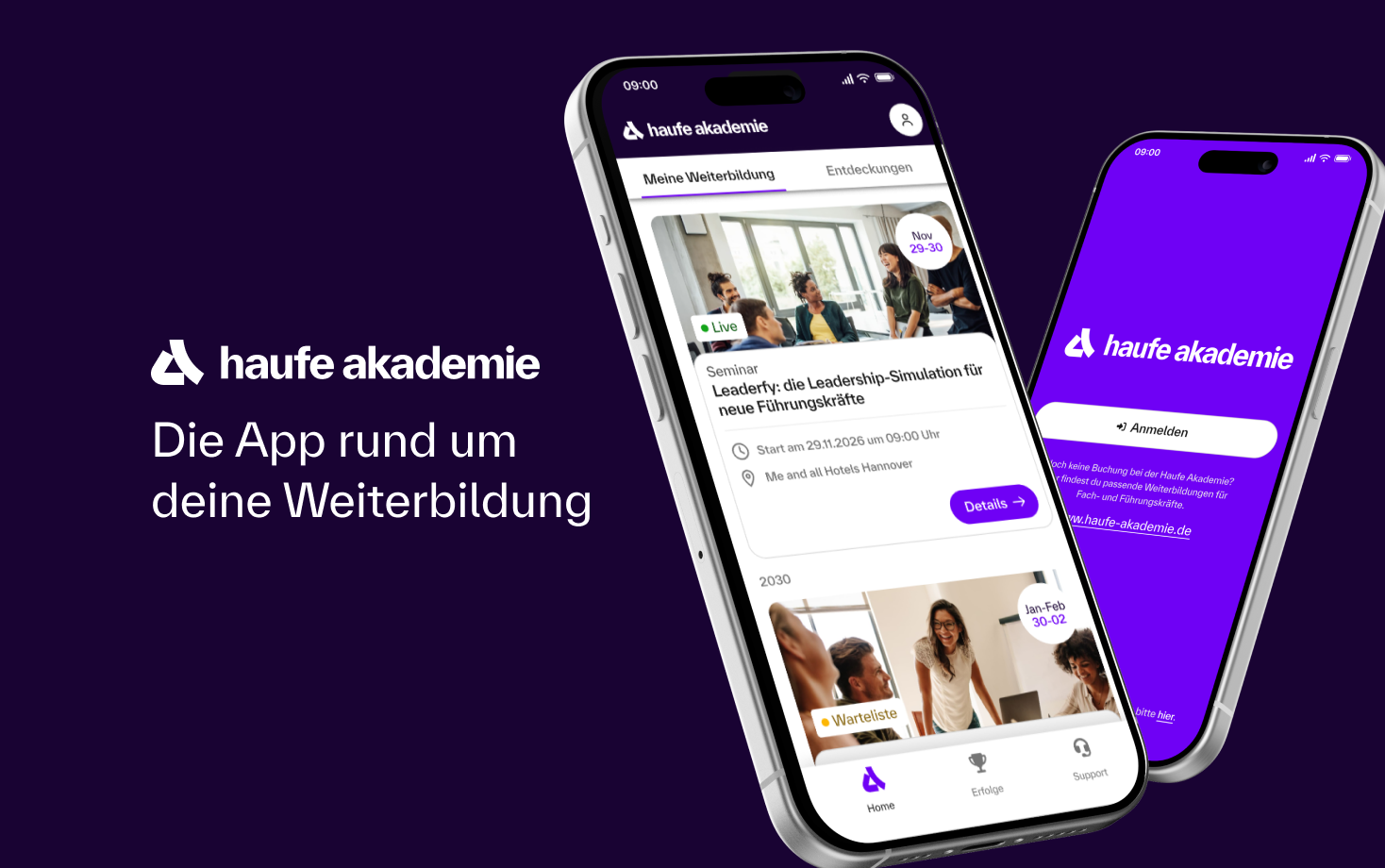
- Training app
- Business Solutions


